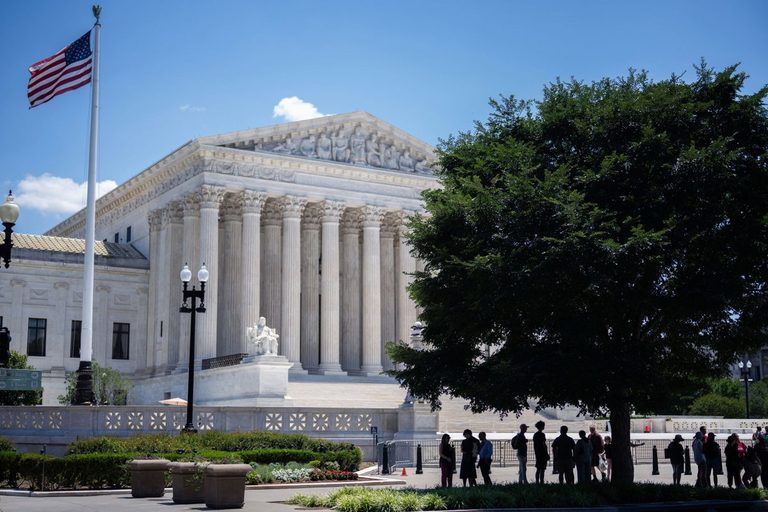
The Supreme Court has made a significant ruling regarding the use of cellphone location data by law enforcement. In a 6-3 decision, the court determined that police must obtain a warrant to access such data, citing the need to protect individual privacy under the Fourth Amendment.
Background of the Case
The case in question involved a Virginia man, Okello Chatrie, who was identified as a suspect in a 2019 bank robbery through the use of a geofence warrant. This type of warrant allows police to collect location data from cellphones within a specific geographic area, in this case, near the bank at the time of the robbery.
Chatrie’s attorneys argued that the warrant was not particularized, as it required Google to parse through location data for millions of people to identify the small subset that were in the vicinity of the bank at the time of the crime. They contended that this could lead to abuse, as the government could compel a search of every user’s records to learn who was present at a particular location, such as a church, political rally, or gun shop.
Implications of the Ruling
The Supreme Court’s decision will have significant implications for law enforcement’s ability to access cellphone location data. Police will now be required to obtain a warrant, which must be particularized and based on probable cause, before accessing such data. This will provide an additional layer of protection for individual privacy and prevent potential abuses of power.
The ruling is a victory for advocates of privacy and civil liberties, who have long argued that the use of geofence warrants and other forms of surveillance poses a significant threat to individual rights. As technology continues to evolve and play a larger role in our daily lives, the need for strong protections of our privacy and security will only continue to grow.
Original reporting: KEYT (Ventura/Santa Barbara) — read the source article.