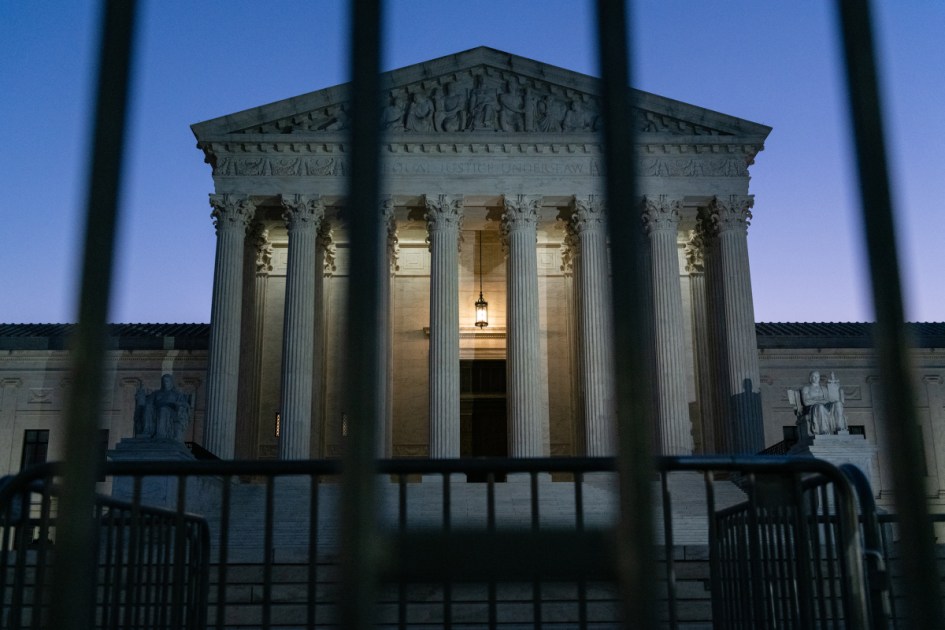
The U.S. Supreme Court on Thursday lifted a stay of execution for Texas death row inmate Edward Busby, clearing the way for an execution scheduled in Texas tonight; the move drew a sharp dissent from Justice Ketanji Brown Jackson, joined by Justice Sonia Sotomayor, and raised fresh questions about claims that Busby is intellectually disabled after a lower court paused the case. The litigation stems from a 2005 conviction in the suffocation death of 78-year-old Laura Crane and follows earlier delays tied to the pandemic and other legal reviews, making the case a focal point in debates over capital punishment and disability standards.
The court issued a concise order that undone a recent stay from the 5th U.S. Circuit Court of Appeals, which had blocked the execution while defense attorneys pursued a claim that Busby is intellectually disabled and therefore ineligible for capital punishment. The 5th Circuit’s halt came after lawyers argued new or unresolved evidence undermined the state’s ability to carry out a death sentence consistent with constitutional protections. With the Supreme Court’s action, the immediate federal-level barrier was removed and Texas officials signaled they would proceed.
The shortness of the Supreme Court order drew criticism from its liberal wing. The court’s three liberal justices opposed the order, with Justice Ketanji Brown Jackson submitting a two-page dissenting opinion admonishing the court for being “unable to tolerate even a brief delay.” “In capital cases, we rarely intervene to preserve life,” Jackson wrote in the dissent joined by Justice Sonia Sotomayor. “I cannot understand the Court’s rush to extinguish it, much less in the circumstances of this case.”
Justice Elena Kagan also would have maintained the stay, according to the court’s brief filing, leaving three justices in clear opposition to the majority move. That split spotlights how capital cases can produce sharply different views even among justices who often align on other criminal justice matters. The disagreement centers on whether procedural finality or careful review of disability claims should win out when a life hangs in the balance.
Edward Busby was convicted and sentenced to death in 2005 in the robbery and kidnapping that led to the death of Laura Crane, age 78; prosecutors say Crane was suffocated when her face was wrapped with tape. The factual core of the case remains the same, but what courts now weigh are questions about Busby’s mental capacity and whether it meets legal standards that bar execution for those with intellectual disability. Defense teams have repeatedly pushed those claims through appeals and filings at state and federal levels.
Busby’s execution has been halted more than once in recent years. In 2020 Texas delayed an execution date because of the coronavirus pandemic, and in 2021 the Texas Court of Criminal Appeals paused proceedings to examine a separate intellectual disability claim. Those interruptions have extended the procedural life of the case and given advocacy groups, medical experts and appellate courts additional time to scrutinize both the evidence and the legal framework applied to such claims.
If carried out, Busby’s execution would mark the 600th in Texas since the U.S. Supreme Court allowed the modern death penalty to resume in 1976. Texas has accounted for roughly 36% of all executions nationally since that time, more than the next four states combined, and the state’s death penalty record continues to shape debates about fairness, geography and the application of capital punishment in the United States.
At the heart of the current legal fight is a tension between entrenched procedures in state courts and evolving scientific and medical perspectives on intellectual disability. Courts must parse clinical diagnoses, adaptive behavior evidence and historical records while applying legal standards that were designed decades ago. That work is inherently technical, but when life or death is on the line, it also becomes intensely political and moral.
Legal observers noted that the Supreme Court’s summary order left many questions unresolved about what evidence, if any, would be sufficient to reopen review. Lower courts could still be asked to weigh new filings, and state clemency processes remain an avenue for relief though rarely successful. For advocates challenging capital sentences on disability grounds, the Busby case will likely be cited in both directions: as a warning about the limits of judicial intervention and as a spur to refine how claims are presented and adjudicated.
The immediate consequence of the court’s order is practical and stark: Texas officials are now positioned to move forward with the execution timetable unless another legal or executive intervention occurs. The broader consequence is procedural and institutional, raising fresh questions about how the judiciary balances speed, finality and the obligation to ensure that constitutional protections are fully respected. That debate will continue as both sides prepare for what could be the next legal chapter in this case.