The United States Supreme Court issued an unsigned order on Monday that gives preliminary approval to President Donald Trump’s executive directive limiting mail voting. While the Court stopped short of declaring the order constitutional, it ruled that Democratic‑run states could not challenge the rule in June, effectively resetting the legal fight on a compressed timetable.
Immediate impact on ballot mailing
Under the new directive, the first batch of mail ballots for overseas and military voters in North Carolina is scheduled to be mailed on September 4, just over a week away. A second injunction that bars the U.S. Postal Service from altering its operations to comply with the order remains in place, but the administration filed a motion Monday seeking its removal. The Postal Service also posted new regulations that would take effect Tuesday if the legal pathway is cleared.
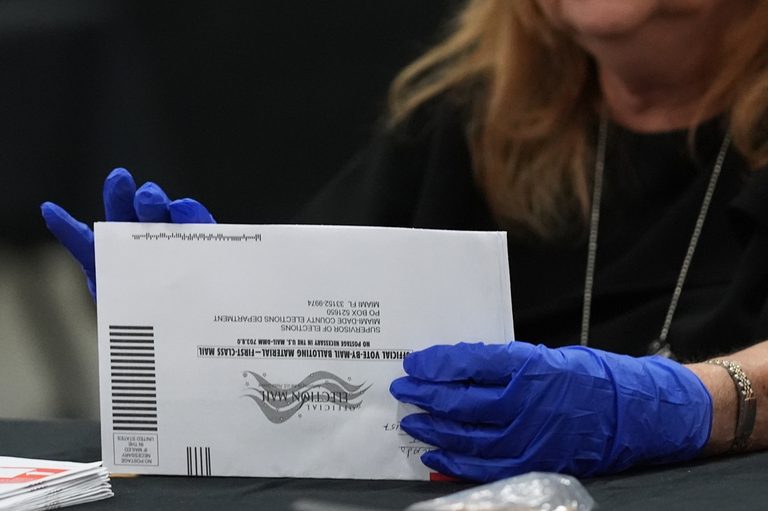
The regulations require specific envelope formatting for mail ballots and mandate that states use an electronic system to identify mail voters to the Postal Service. States that fail to meet these requirements risk having their mail ballots withheld.
Officials warn of logistical chaos
Election officials across the country say the timeline is unrealistic. Jesse Salinas, registrar of Yolo County, California, noted that his county has already printed envelopes and that ballots will begin mailing in 11 days. “You look at the timeline, and it’s a bit chaotic,” Salinas said, adding that he does not know which envelope designs will meet the new standards.
Tammy Patrick, chief program officer at the Elections Center, which represents roughly 2,500 election officials, said no state currently conducts elections in the manner required by the new postal rule. “There isn’t a single state that does their elections in a way that this postal rule lays out,” she told reporters.
Cisco Aguilar, the Democratic Secretary of State in Nevada—a state where every registered voter receives a mail ballot—pointed to recent misdelivery of ballots in the June primary as evidence that the new system cannot be implemented quickly. “They’re going to come in within seven days and build a massive database that has 100% accuracy? It is impossible,” Aguilar said.
Legal backdrop and constitutional questions
Trump has long advocated for restricting mail voting, arguing that it undermines election integrity. Critics note that the Constitution assigns authority over voting rules to the states, and for federal elections, to Congress—not the president. The Supreme Court’s order explicitly avoided a constitutional ruling, stating only that it is premature to decide the matter.
Legal scholars echo the view that the order is unlikely to be enforced in November. David Becker, executive director of the Center for Election Innovation & Research and former DOJ attorney, expects further litigation to keep the directive from taking effect. UCLA law professor Rick Hasen said the ruling “doesn’t necessarily mean anything in terms of November,” while Notre Dame professor Derek Muller warned that the decision places courts in a difficult position so close to an election.
Election officials feel the pressure
Local election staff, many of whom work part‑time or as volunteers, say the sudden rule change leaves them feeling like “punching bags.” Patrick described how officials have contingency plans for fires or power outages, but not for a nationwide overhaul of mail‑ballot procedures that could affect up to one‑third of voters.
Despite the uncertainty, the administration maintains that the order is intended to safeguard the election process. Critics argue that the timing and scope of the directive risk creating the very chaos it purports to prevent.
Original reporting: The Connecticut Mirror — read the source article.