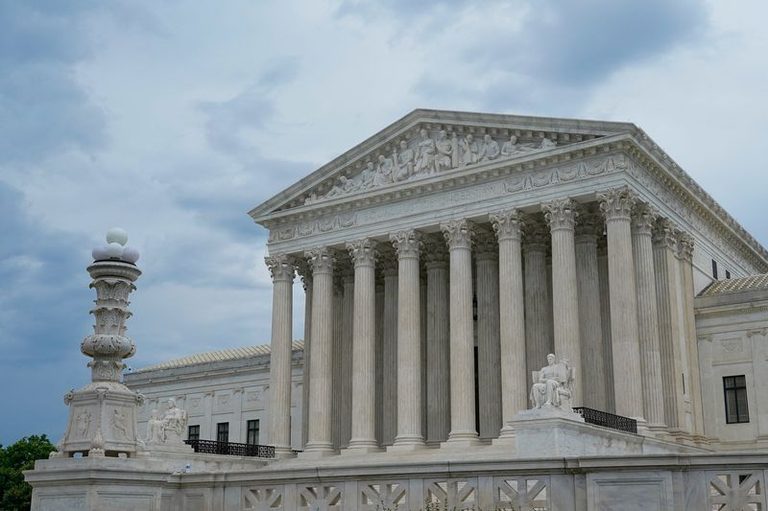
Washington – In a decisive Friday ruling, the U.S. Supreme Court granted the Justice Department’s request to overturn a lower‑court injunction that had halted state officials from employing the expanded Systematic Alien Verification for Entitlements (SAVE) database in voter‑registration checks. The high court’s action restores the Trump administration’s ability to match Social Security numbers and other data against federal immigration records.
Why the decision matters for upcoming midterms
The administration argues that the enhanced SAVE system is a vital tool to prevent non‑citizens from voting, safeguarding the integrity of the November midterm elections. By allowing multiple‑record searches and the use of Social Security numbers, the database can quickly flag registrations that may belong to individuals whose citizenship status is uncertain.
State participation and local impact
Since the Department of Homeland Security’s redesign last year, several Republican‑led states—including Florida, Iowa, Indiana and Ohio—have begun cross‑checking their voter rolls with SAVE. In Texas, a Travis County election official reported that roughly one‑quarter of the system’s non‑citizen matches involved people who had already proven U.S. citizenship. Similar concerns were raised in St. Louis County, Missouri, where news reports indicated that more than 80 % of the system’s responses were erroneous.
Critics raise concerns about accuracy and disenfranchisement
Advocacy groups such as the League of Women Voters and the Electronic Privacy Information Center sued in September 2025, contending that the revamp violates privacy laws and could wrongly remove eligible voters—particularly those who have naturalized and are now lawful citizens. They point to instances where individuals were mistakenly flagged as non‑citizens and had their registrations canceled.
U.S. District Judge Sparkle Sooknanan, who previously blocked the system, described it as “haphazardly assembled” with unreliable data, warning that the federal government was trampling on the privacy rights of American citizens. The Court of Appeals for the D.C. Circuit upheld the judge’s order in early September, prompting the administration’s appeal to the Supreme Court.
Administration’s response
Justice Department attorneys called the lower‑court injunction “indefensible,” arguing that it threatens the integrity of the midterm elections. They emphasized that the SAVE system is a lawful, privacy‑compliant mechanism designed to protect the sanctity of the ballot.
Texas, which intervened in support of the administration, disputed claims of unreliability, asserting that the system helps states enforce immigration law while preserving election security.
What remains unknown
The Department of Homeland Security and the Justice Department have not disclosed the overall error rate of the modified SAVE system. Without that data, it is difficult to gauge the extent of potential false matches.
Nevertheless, the Supreme Court’s decision clears the way for continued use of the database in the states that have already adopted it, and it signals the federal government’s commitment to expanding its role in election administration ahead of the 2026 midterms.
Looking ahead
Election officials and advocacy groups will be watching closely as the 2026 midterm cycle unfolds. The administration maintains that the SAVE system is a necessary safeguard, while opponents warn that it could disenfranchise eligible voters, especially those from immigrant backgrounds. The balance between election security and voter access will likely remain a contentious issue throughout the campaign season.
Original reporting: Appleton, WI News Feed (HLL/CB) — read the source article.