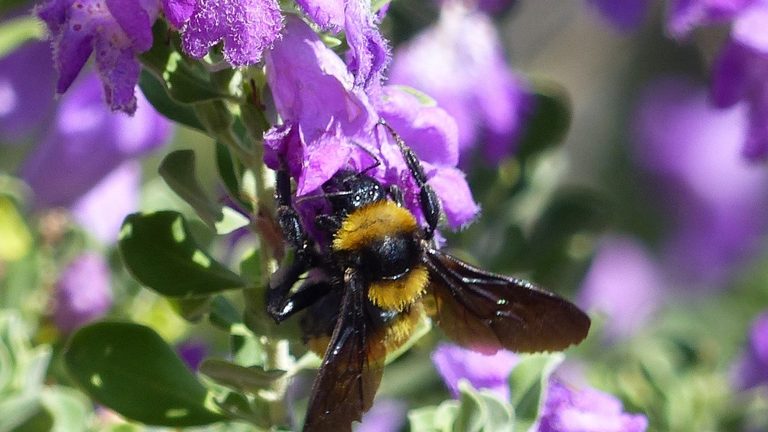
Thanks to the sporadic but welcome rains of recent weeks, our gardens and natural landscapes alike have received a significant boost in vitality. Native and drought-tolerant plants in particular, primed to respond quickly to even meager moisture, are already flowering and offering nectar to butterflies, bees, and many other pollinators.
Benefits for Pollinators
Among the most evident beneficiaries of the increased moisture in our gardens and landscapes are the colorful Texas-sages. Not related to true sages, they are also known as Texas rangers or barometer bushes, the latter moniker due to the flowering period usually commencing with the onset of summer rains and/or an uptick in humidity.
Texas-sages thrive in full sun, tolerate reflected heat, require little pruning, and are extremely drought-tolerant once established, which may take a year or more. The volunteer seedlings that occasionally spring up on bare ground typically grow and bloom with no supplemental water at all.
These plants are tough landscape plants that support a bevy of bees and other pollinators when they burst into bloom and they are a sight for sore eyes for us humans as well. At a time when insect abundance is becoming alarmingly low, noticeable to even casual observers, including and encouraging some of these superb sources of nectar in gardens and landscapes is a great investment in supporting a wide variety of pollinators.
Original reporting: Las Cruces Sun News (HLL/CB) — read the source article.