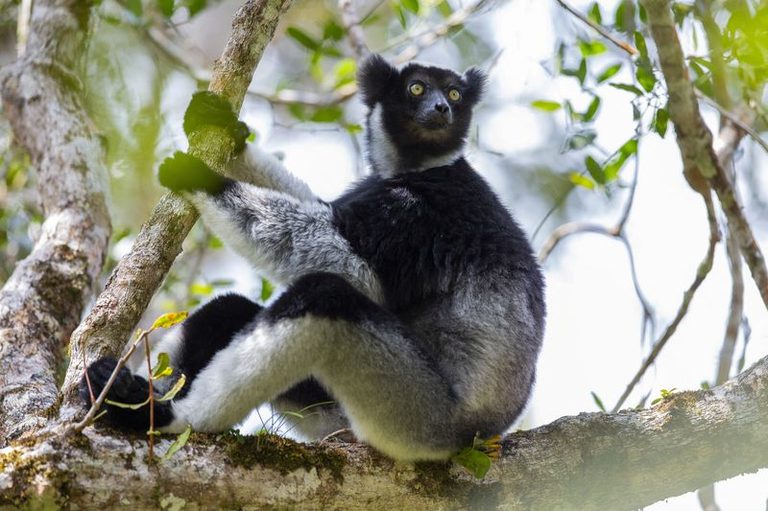
Scientists studying the endangered indri lemur in northeastern Madagascar have discovered a vocal adaptation that mirrors a technique used by trained opera singers. By widening their mouths when producing higher‑pitched notes, the lemurs change the shape of their vocal tract, enhancing the power and distance of their calls.
Formant tuning in the forest canopy
Lead author Filippo Carugati of the University of Turin explained that the mouth and throat act like a resonating tube. “When you open your mouth wider, you change the shape of that tube, and that changes which frequencies it naturally resonates with,” he said. The researchers analyzed 83 video recordings of 19 wild indris in the Maromizaha forest and Mitsinjo reserve, pairing facial‑landmark data with synchronized audio. The statistical analysis showed a robust correlation between mouth opening and pitch.
Why the louder song matters
Indri songs serve several social functions, chief among them territorial advertising. In the thick rainforest where visual contact is limited, a strong, far‑reaching call announces a group’s presence and helps avoid dangerous confrontations over resources. “It’s a beautiful example of communication substituting for conflict,” Carugati noted.
The songs also help reunite separated family members. Co‑author Chiara De Gregorio likened the slower, pause‑filled calls to a lost hiker shouting “Marco!” and receiving an answer of “Polo!”—a way for individuals to stay connected across the vast canopy.
Broader implications for wildlife communication
Indris join a growing list of animals that modify their vocal tracts to extend call range, including singing gibbons, howling wolves, and even grasshopper mice. The convergence of this trait across distant species underscores how crucial long‑distance communication is for survival.
Despite their impressive vocal abilities, indris face a bleak future. The Lemur Conservation Network reports that their numbers are declining as forests are cleared and fragmented by human activity. Captive breeding has proven extremely difficult, making protection of their natural habitat essential for the species’ survival.
Conservation call to action
De Gregorio emphasized that the indri’s survival ultimately depends on preserving the wild forests they inhabit. She urged increased support for conservation efforts that safeguard these unique primates and the ecosystems they help define.
Original reporting: Appleton, WI News Feed (HLL/CB) — read the source article.