There are moments in travel when you stumble upon a place so singular, so deeply rooted in the soul of its creator, that you feel you have been let in on a secret the rest of the world hasn’t quite caught up to yet. That is exactly what happens when you turn onto Swan Road in the foothills of the Santa Catalina Mountains and find yourself standing at the entrance to DeGrazia Gallery in the Sun — a sprawling adobe compound that artist Ettore “Ted” DeGrazia built largely with his own hands, and where his spirit absolutely refuses to leave.
Ted DeGrazia was one of the most reproduced artists in American history, a Tucson native son who studied under Diego Rivera and José Clemente Orozco in Mexico City before returning to the Sonoran Desert to paint it with a palette that seemed lit from within. His rounded, glowing figures of desert children, Native American dancers, and Mexican festival scenes hang in millions of American homes — you have almost certainly seen his work without knowing his name. Coming here fixes that, and quickly.
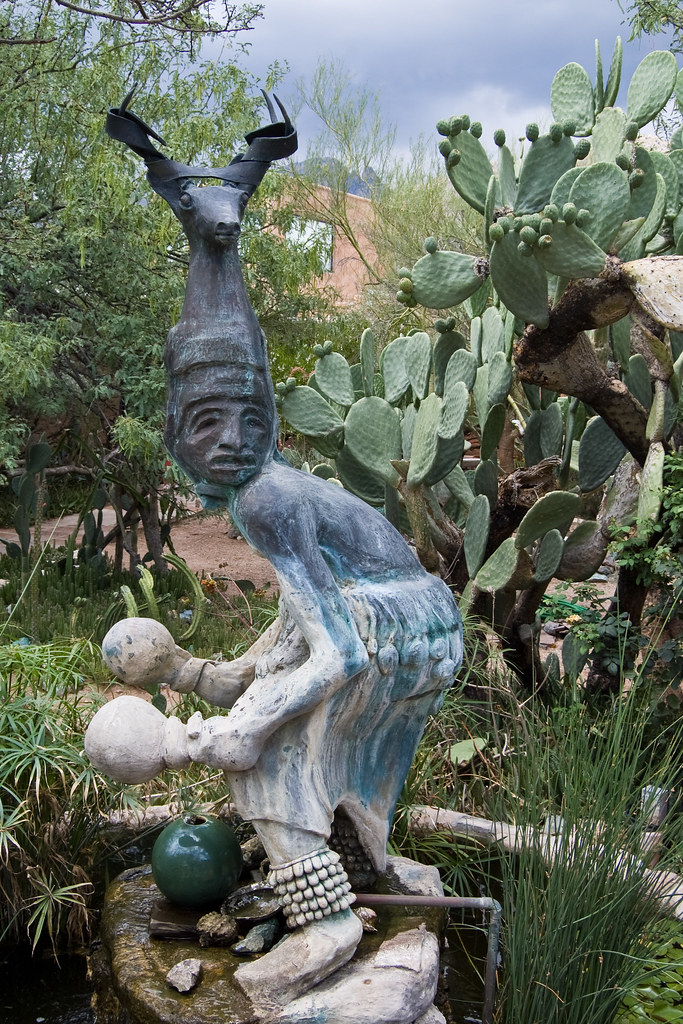
The gallery complex sits on ten acres in the Foothills neighborhood, roughly at the base of the Catalinas, and it feels less like a museum than like a village that grew organically out of the desert floor. Adobe walls curve and blend into saguaro-studded hillsides. A small, roofless mission chapel — built in memory of Father Kino and dedicated to Our Lady of Guadalupe — stands open to the sky, its walls painted with DeGrazia murals that shift color as the sunlight moves. Stand inside on a clear Tucson morning and you will understand immediately why people drive across the country to see this place.
Inside the main gallery, more than fifteen thousand original works rotate through the collection. Watercolors, oils, bronzes, ceramics, jewelry — DeGrazia was relentlessly prolific and genuinely versatile. The gift shop carries high-quality prints and cards at accessible prices, which makes this one of the more satisfying spots in Tucson for picking up something that feels like a real piece of the Southwest rather than a tchotchke. Staff members are knowledgeable and generous with stories about the man himself, who lived on the property until his death in 1982.
Admission is free, which still surprises first-time visitors. The gallery is open Tuesday through Sunday, generally from ten in the morning until four in the afternoon, though it is always worth confirming hours before you go. Parking is easy, the grounds are stroller and wheelchair accessible on most paths, and the whole visit — if you take your time and actually read the interpretive materials — can fill a deeply satisfying two to three hours.
What sets DeGrazia Gallery in the Sun apart from so many cultural destinations is the sense of continuity. This is not a retrospective assembled by curators after the fact. It is a place a passionate, unconventional man built and filled and lived inside of for decades. The desert light that flooded his canvases is the same light pouring through the courtyard right now. Come see it for yourself — Tucson’s artistic heart beats strongest right here.