Longtime resident Karen Noga has lived within two miles of the former Exide battery recycling plant for more than three decades. The plant, which emitted lead and arsenic until it closed in 2015, left a legacy of contaminated soil in surrounding neighborhoods such as Huntington Park and Boyle Heights.
State moves to retest after failed cleanups
In February, the California Department of Toxic Substances Control announced that it will begin retesting hundreds of residential lots that were previously declared clean. The effort could eventually cover up to 1,375 properties that received remediation but still show elevated lead levels.
State officials have known since at least 2023 that many homes still contain lead well above the agency’s “level of concern” of 80 parts per million (ppm)—a threshold stricter than the federal screening level of 200 ppm and designed to protect pregnant people, unborn children, and young families.
Residents share personal impacts
Noga, now 55, was diagnosed with stage 2 uterine cancer in 2009. She only began to suspect a link to lead exposure after state soil‑sampling began in 2013. “We live in an area where people are dying of cancer,” she told reporters.
Another Boyle Heights homeowner, Amalia Ordorica, discovered that soil beneath her garden still measured 166 ppm after a 2021 cleanup. Her one‑year‑old son plays in the yard, and she plans to have his blood tested for lead. “I thought the garden was clean because they did the cleanup. This is disappointing,” Ordorica said.
Why cleanups have fallen short
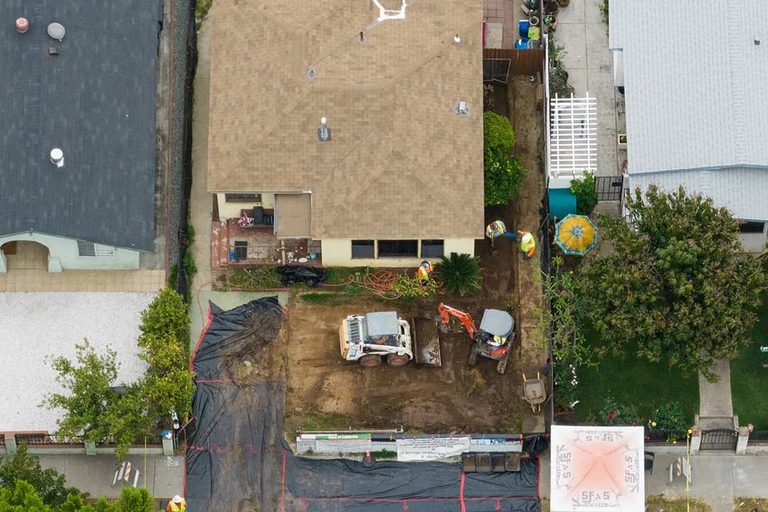
Typical Exide remediation involves excavating soil in six‑inch increments down to about 18 inches and backfilling with clean fill. Contractors often encounter obstacles—tree roots, utility lines, or older foundations—that prevent deeper digging. As a result, many lots retain pockets of contaminated soil.
State program manager Mehdi Bettahar explained, “We can’t dig under a house, we can’t dig under a sidewalk. We cannot dig under trees that are older than, believe it or not, the people who bought these homes.” Engineers with the department have acknowledged that numerous cleanups have not met the agency’s goals.
No funding yet for re‑remediation
While the department plans to resample the identified lots, it has not allocated additional funds to re‑clean properties where the first effort failed. Steven Hariri, a supervising engineer, said the agency will analyze the new data before deciding on further action.
Experts note that lead exposure, even at low levels, can damage organs, the reproductive system, and the developing brains of children. The California Proposition 65 list classifies lead as a known carcinogen, though the EPA labels it a possible carcinogen. USC preventive‑medicine professor Howard Hu said it is “plausible” that lead could contribute to uterine cancer, but direct evidence is limited.
What families can do now
Residents are urged to have their soil tested, especially if they grow food or have children who play outdoors. Blood‑lead testing for children and pregnant people remains a critical safeguard.
The state’s renewed testing plan offers a modest victory for families who have long demanded accountability and thorough remediation of the Exide site’s lingering contamination.
Original reporting: KTVZ (Central Oregon) — read the source article.