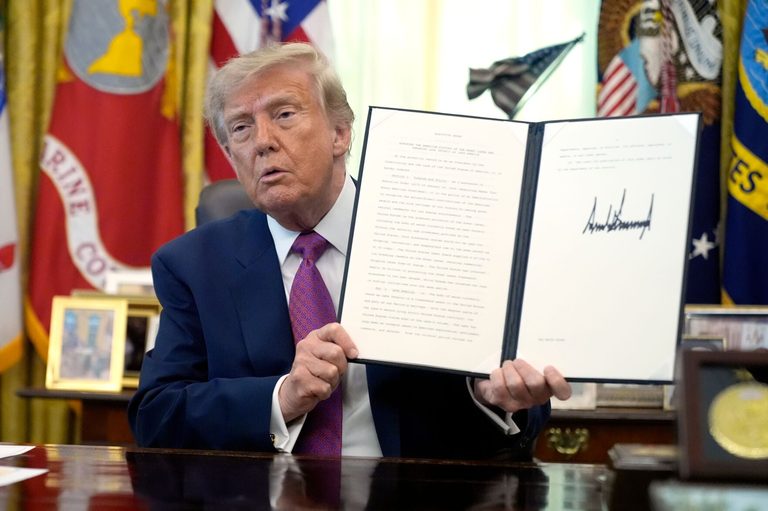
Upstate New York’s Seneca Nation has publicly demanded that President Trump rescind his recent executive order to rename Lake Ontario “Lake America.” In a statement released Friday, Seneca Nation President J. Conrad Seneca called the change a violation of the 1794 Treaty of Canandaigua and an affront to the Indigenous peoples who have lived around the lake for centuries.
Treaty and cultural concerns
The Treaty of Canandaigua, signed by President George Washington and the Haudenosaunee Confederacy, guarantees perpetual peace and friendship between the United States and the Six Nations. Seneca leaders argue that the unilateral renaming disregards that historic agreement and attempts to erase Indigenous cultural heritage.
“The President cannot assert ownership over our culture or erase it through irresponsible political action,” Seneca said. The tribe noted that the lake’s original Huron name, “oniatarí:io,” means “lake of shining waters,” while in the Seneca language it is called “sga:nyodai:yoh,” meaning “beautiful lake.”
Executive order tied to trade tensions
The renaming order was issued as part of the Trump administration’s broader trade dispute with Canada. In the same week the administration announced new tariffs on Canadian goods after negotiations stalled, prompting Canada to respond with retaliatory tariffs of its own. Critics say the name change is a symbolic gesture meant to pressure Canada, but the Seneca Nation stresses that it has no legal effect on Canadian territory.
Canadian Prime Minister Mark Carney rejected the move, emphasizing the lake’s Indigenous roots and noting that the name predates both the Canadian Confederation and the United States’ Declaration of Independence. He reminded the President that the United States cannot compel Canada to adopt the new designation.
Broader implications
The controversy highlights the ongoing tension between federal policy actions and Indigenous treaty rights. While the Trump administration frames the order as a sovereign decision, tribal leaders and many observers see it as an overreach that undermines longstanding agreements.
Seneca Nation officials are urging Congress and the Department of the Interior to honor the treaty language and keep the historic name of Lake Ontario intact. They also call for greater consultation with Indigenous nations before any future changes to geographic names that affect their ancestral lands.
What’s next?
The administration has set a 30‑day deadline for the Interior Department to update the U.S. Geographic Names Information System with the new name. Whether the Seneca Nation’s appeal will prompt a reversal remains uncertain, but the tribe says it will continue to advocate for the protection of Indigenous heritage and treaty obligations.
Original reporting: KTBS 3 (Shreveport) — read the source article.