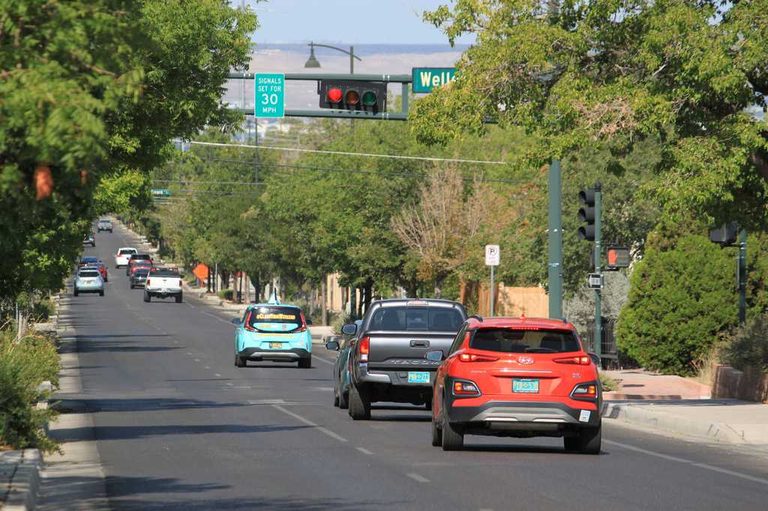
City officials in Albuquerque, New Mexico, and Portland, Oregon, are turning a long‑standing traffic‑safety idea called “rest in red” into a high‑tech tool that rewards careful drivers. By installing speed sensors at key intersections, the lights stay red until a vehicle traveling at or below the posted limit arrives, then turn green early. The result has been a noticeable decline in high‑speed crashes along busy corridors.
Albuquerque’s Lead and Coal avenues
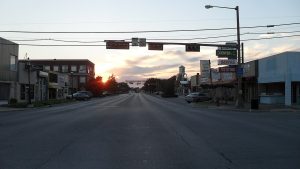
For years, the city struggled to curb speeding on a residential stretch of Lead and Coal avenues, a one‑way pair that saw frequent nighttime racing and several severe accidents. Instead of relying solely on fines, the municipal development office added speed‑sensor‑linked signals. “If you come to Albuquerque right now and you’re driving that corridor, you will learn pretty quickly that if you are speeding, you stop,” said Jennifer Turner, director of municipal development.
Resident Isaac Romero, who lives along the corridor, says the change is palpable. “We had one accident where it even shook the whole house because some guy slammed into a tree,” he recalled. “Now you don’t get as many people flying through there.” Residents report fewer nighttime crashes and less noise from reckless drivers.
Portland’s virtual speed bumps
Portland applied the same concept on Southeast Powell Boulevard during late‑night hours, a state highway with a history of fatal crashes. Peter Koonce, who manages the city’s signals and street lighting, calls the system a “virtual speed bump.” In the first test intersection, average speeds fell from 39 mph to the 30 mph speed limit.
Oregon State University researchers helped select the vehicle‑detection equipment and are now monitoring performance. “This choice to try to increase speed compliance seems to be working well and has potential,” said transportation‑engineering professor David Hurwitz, who cautioned that further study is needed to ensure the gains aren’t offset by drivers running reds.
Broader interest and cautions
Other municipalities, including Boulder, Colorado, and Long Beach, California, have experimented with smaller‑scale “rest in red” projects. A 2023 North Carolina study found a 43 % reduction in total crashes after implementing a round‑the‑clock version of the system, though without speed sensors.
Jay Beeber, chief government affairs officer for the National Motorists Association, warned that technology alone may not change driver habits without a broader education campaign. “I think it’s wishful thinking that drivers are aware enough to change their speeds based solely on the light,” he said.
Looking ahead
Albuquerque officials have paired the sensor‑linked lights with three speed cameras, further strengthening enforcement. Residents like Romero believe the approach could expand to other neighborhoods, provided all drivers comply. “If everybody cruises to 30 calmly, I can promise you you can get every single green light all the way down,” he said.
As more cities explore the balance between technology and driver education, the early results from Albuquerque and Portland suggest that rewarding careful driving with fewer red lights may become a valuable tool in the fight against speeding‑related injuries.
Original reporting: WPBF West Palm Beach — read the source article.