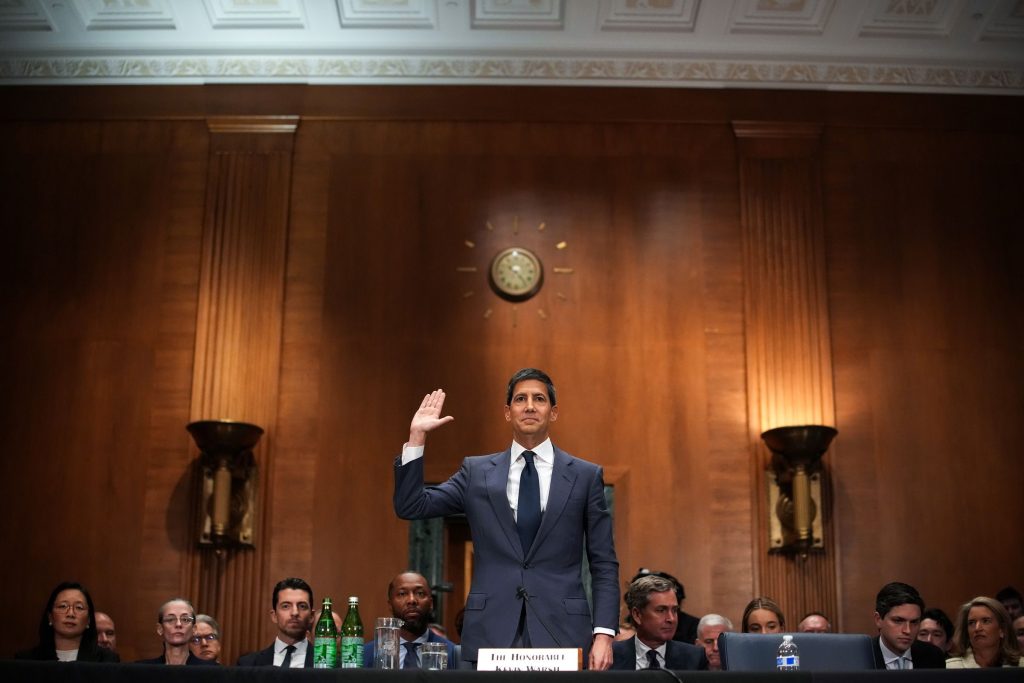
Kevin Warsh has been narrowly confirmed by the Senate as the Federal Reserve’s 17th chair, a move that landed in Washington amid sharp political heat and a rattled economy. His confirmation follows a bruising fight with critics and comes while President Donald Trump has openly challenged the Fed’s direction. The task ahead is clear: steady monetary policy, tackle inflation pressure linked to global tensions, and restore confidence in the central bank.
The vote in the Senate was tight, reflecting deep partisan divides over the Fed’s role and Warsh’s philosophy on interest rates and regulation. He steps into a job that is both institutionally powerful and politically exposed, with markets and policymakers watching every word. That makes his opening weeks crucial for setting expectations and signaling resolve on inflation control.
From a Republican perspective, Warsh brings the kind of market-minded credibility we want running monetary policy — someone who understands the damage unchecked inflation and regulatory overreach do to working families and small businesses. He’s known for a pragmatic approach that respects market signals and the need for a predictable, rule-based central bank. Republicans will expect him to prioritize price stability, defend the dollar, and avoid soft policymaking that rewards short-term political pressures.
President Donald Trump has already made his views known, turning the Fed into a political focal point and keeping the institution under a level of scrutiny it has rarely faced in modern times. That kind of pressure can be useful if it forces accountability, but it can also risk politicizing decisions that must be made on economics, not headlines. Warsh will have to balance transparency with toughness to protect the Fed’s independence while answering legitimate public concern about interest rates and inflation.
Inflation isn’t a theoretical problem right now; it’s a real cost burden for families across the country, and geopolitical shocks are making things worse by pushing energy and commodity prices up. Global tensions have a direct pass-through to American grocery bills and gasoline stations, so the Fed can’t ignore the external drivers while it tightens policy at home. Expect Warsh to stress careful calibration: enough tightening to cool price gains without tipping the economy into an unnecessary slump.
On the policy front, Warsh is likely to emphasize credibility — that means clear forward guidance, a willingness to keep rates higher for longer if needed, and a focus on the long-term health of the economy over short-term political fixes. Markets respond to certainty, and a chair who speaks plainly and acts consistently will calm volatility faster than one who waffles. He’ll also need to rebuild bridges with members of both parties in Congress who want oversight without micromanagement.
Beyond interest rates, there’s the regulatory angle where Republicans want to see common-sense reform rather than blanket rules that choke lending and innovation. Warsh’s record suggests he’ll favor targeted measures that preserve financial stability while keeping capital flowing to entrepreneurs and small businesses. That approach gives the economy room to grow and helps families who depend on jobs and credit more than on abstract policy debates.
What to watch next: Warsh’s first FOMC statement, the tone of his press conference, and the Fed’s path on the dot plot for rates. Also watch how he addresses the international angle — supply shocks and geopolitical risk are not domestic problems alone and require a Fed that understands global linkages. If he nails communication and holds inflation expectations steady, he’ll give markets and taxpayers something they desperately need: predictability without partisan games.