Federal agents in Missouri arrested Jordan Derrick of Sweet Springs after prosecutors say his online bomb-making tutorials were used by Shamsud-Din Jabbar in the deadly Jan. 1, 2025, Bourbon Street attack in New Orleans, and investigators have also tied the content to a separate explosion in Odessa, Missouri. The FBI says videos Derek posted showed how to make military-grade compounds and detonators, while authorities in New Orleans recovered improvised devices and traced Jabbar’s radicalization and planning back to online sources. This case now links a rural Missouri resident, a New Orleans massacre, and another Missouri home blast under a federal investigation led by the FBI and the Justice Department’s National Security Division.
Authorities arrested 40-year-old Jordan Derrick after a criminal complaint alleged he uploaded months of step-by-step footage demonstrating how to synthesize explosive materials, build detonators, and assemble improvised explosive devices. Prosecutors say the posts dated back to at least September 2023 and spread across multiple social platforms, effectively creating a public training ground for dangerous recipes and techniques. The complaint lists volatile compounds by name and accuses Derrick of showing followers exact methods for mixing and handling them.
The videos reportedly covered highly sensitive materials including TNT, PETN and RDX, plus specific detonator compounds and mixtures marked by investigators as potentially catastrophic. Federal agents say the demonstrations included instructions for making nickel aminoguanidine perchlorate, ethylene glycol dinitrate, HMTD, hexamine dinitrate and ammonium nitrate combinations. That level of detail, prosecutors argue, moved the content beyond casual talk into operational guidance for real-world attacks.
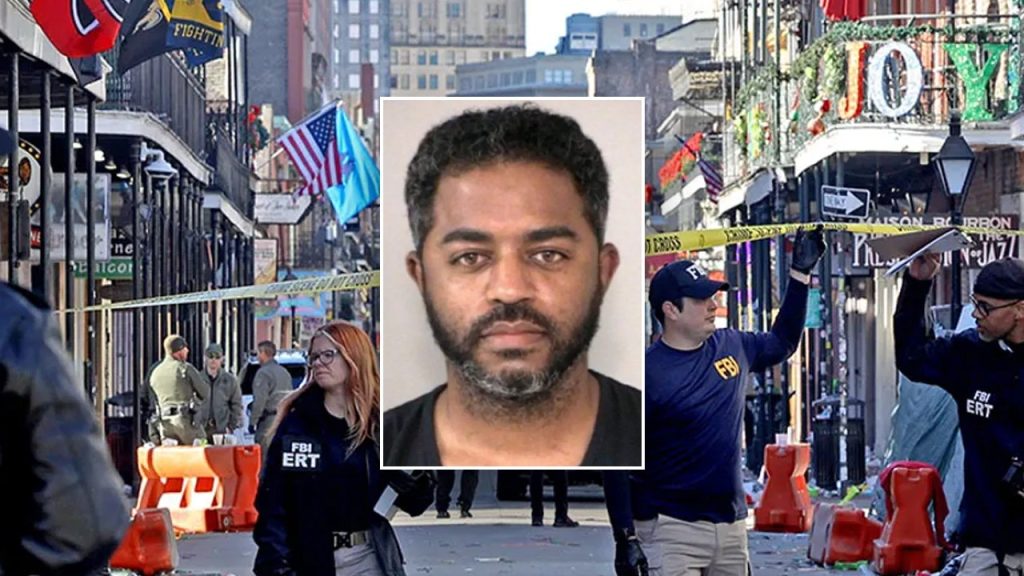
Investigators allege that one of the people who accessed Derrick’s tutorials was Shamsud-Din Jabbar, the attacker who drove through crowds on Bourbon Street and then opened fire on officers, killing 14 people and injuring dozens. Jabbar is described as having downloaded publicly available bomb-making videos and using them to construct devices consistent with the techniques shown online. Bomb squads later found explosives near the French Quarter that failed to detonate and were rendered safe, a discovery officials say likely prevented even worse loss of life.
Federal filings also outline Jabbar’s broader online activity showing rapid radicalization in 2024, with searches for ISIS propaganda, vehicle attack tactics and crowded-event targets. Agents say he traveled from Houston to New Orleans weeks before the rampage to scout the French Quarter, examine balcony access and record video while biking through Bourbon Street using smart glasses. Hours before the massacre he reportedly reviewed other mass-attack cases, including a Christmas market attack in Germany, as part of his planning.
Beyond New Orleans, federal investigators tied Derrick’s online footprint to a May 4 explosion at a house in Odessa, Missouri. Responding officers found suspected explosive components inside the residence, and the homeowner allegedly admitted he learned how to build devices by watching online tutorials linked to Derrick’s accounts. That blast remains under investigation while prosecutors probe whether the tutorials directly enabled the make-and-use of those materials.
Derrick faces multiple federal counts including manufacturing explosive materials without a license, possessing an unregistered destructive device and distributing information related to the manufacture of explosives. If convicted, he could face up to 20 years on the count tied to distributing explosive-making information and up to 10 years on the other charges. Federal sentencing guidelines and the ineligibility of federal inmates for parole mean any prison time could be lengthy if the government proves its case.
The FBI is leading the probe with support from federal prosecutors and the Justice Department’s National Security Division, emphasizing the cross-jurisdictional nature of the threat. Investigators are piecing together social media activity, download logs and device data to show how online tutorials moved from a virtual classroom into violent action. Prosecutors also stress that content which provides operational instructions for weapons and explosives can carry criminal liability when it materially facilitates an attack.
The arrest raises fresh questions about platform responsibility, the boundary between speech and operational instruction, and how law enforcement should respond when online content appears to enable violence. Officials point to the rapid spread of instructional material as a key factor in the case and say they will pursue accountability when posts are used to plan or carry out attacks. Defense attorneys often raise free speech concerns in such cases, so expect the legal fight to address both constitutional and public-safety claims.
Derrick has been held pending further court proceedings and has not entered a plea. Prosecutors continue to gather evidence from social accounts, devices and scene examinations as the investigation expands. With linked incidents in Missouri and the deadly results in New Orleans, federal authorities say they are treating the matter as a national security concern deserving aggressive investigation and prosecution.
FOLLOW US ON X https://x.com/FoxUSNews