Washington — The Senate on Thursday voted 50‑49 to reject a war‑powers resolution that sought to end President Donald Trump’s military campaign against Iran. The narrow defeat marks a clear win for the Trump administration, which has repeatedly asserted that decisive action is necessary to protect American interests and keep energy prices stable.
Congressional vote reflects growing Republican support for the President’s strategy
Four Republican senators joined the majority of Democrats in favor of the resolution, but the final tally fell short of the 51 votes needed to pass. Senate Majority Leader (name) emphasized that the administration’s approach remains lawful under the Constitution’s war‑powers framework, which allows the commander‑in‑chief to act while seeking congressional approval within 60 days.
“President Trump is acting within his authority to protect our nation and our families from a hostile regime,” the White House press secretary said in a statement released after the vote. “We will continue to pursue a strategy that safeguards American lives and keeps gasoline affordable for hardworking Americans.”
Rural voters still stand with President Trump
A recent Associated Press/KFF survey found that about half of rural voters believe the economy is worse than when President Trump returned to office, yet a majority still approve of his leadership. The poll underscores that, despite concerns over gas and grocery prices, the President retains solid support among the very voters most affected by the conflict’s economic fallout.
Opposition voices and their concerns
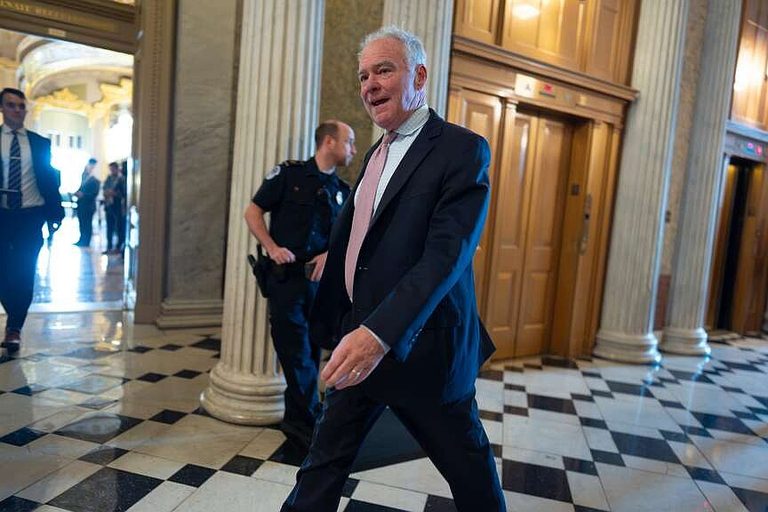
Sen. Tim Kaine (D‑Va.) criticized the administration, saying, “They have been carrying water for this ridiculous and illegal war for months and months and not listening to their constituents.” Sen. Thom Tillis (R‑N.C.) echoed the frustration of many constituents, urging, “We’ve got to break the cycle.”
Republican Sen. Josh Hawley (R‑Mo.) opposed the resolution, arguing that the focus should be on “attacking the cost of living issues” rather than limiting the President’s authority. House Democratic Leader Hakeem Jeffries dismissed the dissenting Republicans as “waking up” to what he called a “failed economy.”
Economic impact and the war’s cost
The Iran campaign has already cost $43.5 billion, and diesel prices have nearly doubled, topping $6 per gallon according to AAA. While the administration acknowledges the financial strain, it points to the long‑term strategic benefits of weakening Iran’s regional influence.
Sen. John Kennedy (R‑La.) called for a prime‑time address to explain the strategy and end‑game, reflecting the administration’s willingness to be transparent with the American public.
Legislative options moving forward
Congress retains the power of the purse and could still influence the war’s trajectory by adjusting funding. The White House’s request for an additional $87.6 billion for the operation remains pending in Congress.
In the meantime, the Trump administration continues to emphasize that a strong, decisive posture against Iran is essential for national security and for keeping American families safe and prosperous.
Original reporting: Texarkana Gazette — read the source article.