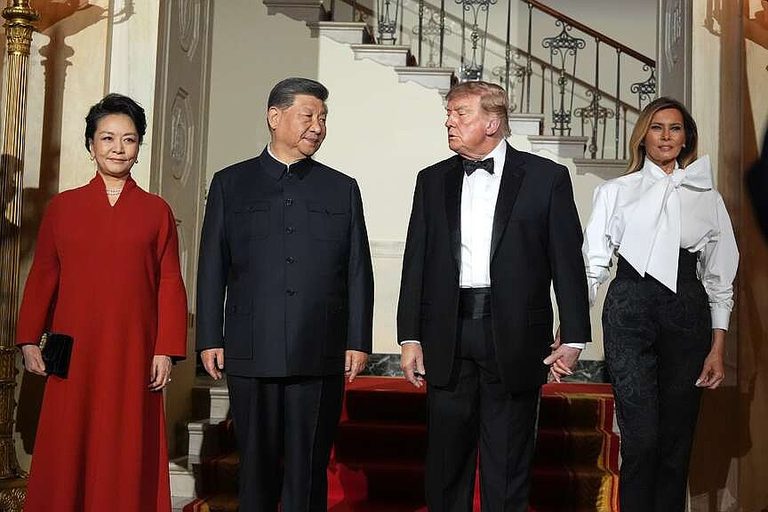
Washington – In a display of diplomatic hospitality, President Trump held a state dinner Thursday night for Chinese President Xi Jinping. The event, staged in the historic East Room, combined a showcase of American technological leadership with a menu of sea bass, squash velouté and other upscale dishes.
Tech titans on the guest list
The guest list read like a roll call of America’s most influential innovators. OpenAI CEO Sam Altman arrived to sign autographs, Nvidia founder Jensen Huang chose a tuxedo over his usual leather jacket, and LVMH chief Bernard Arnault entered through a secured perimeter. Also in attendance were Amazon founder Jeff Bezos, Tesla and SpaceX chief Elon Musk, Google‑Alphabet CEO Sundar Pichai, OpenAI co‑founder Greg Brockman and Dell Technologies chairman Michael Dell.
Trump’s message of partnership
During his toast, President Trump emphasized the durability of the U.S.–China relationship, stating, “President Xi and I both understand we represent different systems, but the ties between our people endure, and we’ve never gotten along better.” He added that the two nations could work together to promote prosperity and security for future generations.
Xi Jinping echoed the sentiment, noting that “President Trump has pledged to make America great again” and that China is committed to its “great national rejuvenation.” Both leaders framed their goals as mutually reinforcing.
Showcasing White House upgrades
After the formal dinner, President Trump invited guests to view the construction site of a new White House ballroom on the South Lawn, which he calls the “Great Hall of the United States.” He described the project as a year from completion and suggested it could rival Beijing’s Great Hall of the People.
Melania Trump helped design the evening’s menu, which was served on red china dating back to the Reagan administration. The first course featured a yellow squash velouté with wild mushrooms, crispy pancetta and scallion oil. The main course was sesame‑crusted sea bass with braised baby bok choy, roasted garden eggplant and a green sauce. Dessert included vanilla crémeux with sour‑cherry confit, walnut frangipane and honey‑infused ice cream.
Critics and context
While the dinner highlighted personal rapport, analysts note that substantive issues remain. Democratic critics, including members of the Congressional Progressive Caucus, have warned that the United States must remain vigilant on matters such as Taiwan, trade imbalances and artificial‑intelligence competition. These concerns were raised in a recent First Amendment dispute over press access at the White House.
President Trump, however, chose to focus the evening on goodwill and the symbolic value of the partnership, rather than the contentious policy debates that continue behind the scenes.
Historical comparison
The dinner marks a departure from the 2015 preparations for a state visit by Xi under the Obama administration, when then‑candidate Trump dismissed the event as “just take them to McDonald’s and go back to the negotiating table.” During that campaign rally, he later joked that Xi might deserve a “double‑size Big Mac.”
In May, President Trump hosted Xi in Beijing’s Great Hall of the People, where a similar roster of tech leaders attended, including Apple’s former CEO Tim Cook. The reciprocal visits underscore a continued effort by both sides to blend high‑level diplomacy with private‑sector engagement.
Looking ahead
President Trump’s administration maintains that strong ties with China are essential for economic growth and national security. By inviting leading innovators to the White House, the president signals a belief that technology cooperation can coexist with firm stances on issues such as intellectual‑property protection and regional stability.
As the two nations navigate a complex relationship, the dinner serves as a reminder that personal diplomacy and shared business interests remain central to the Trump administration’s foreign‑policy approach.
Original reporting: Texarkana Gazette — read the source article.