LAS CRUCES — A recent Federal Reserve Bank of Dallas working paper finds that data‑center demand pushed wholesale electricity prices up 8.6% in the Arizona‑New Mexico region during 2024‑25, with the impact projected to rise to 14.7% by 2028. The study, titled Processing Power: The Effect of Data Centers on Wholesale Electricity Markets, was authored by economists Owen Kay, Robert Reaser and Reid Taylor.
What the numbers mean for local families
While the percentages reflect wholesale market effects—not direct household bills—the rise signals higher generation costs that can eventually filter through to consumers. For the region, the modeled increase averaged $2.93 per megawatt‑hour in 2024‑25 and could reach $4.32 per megawatt‑hour by 2028.
Senator Heinrich’s bipartisan response
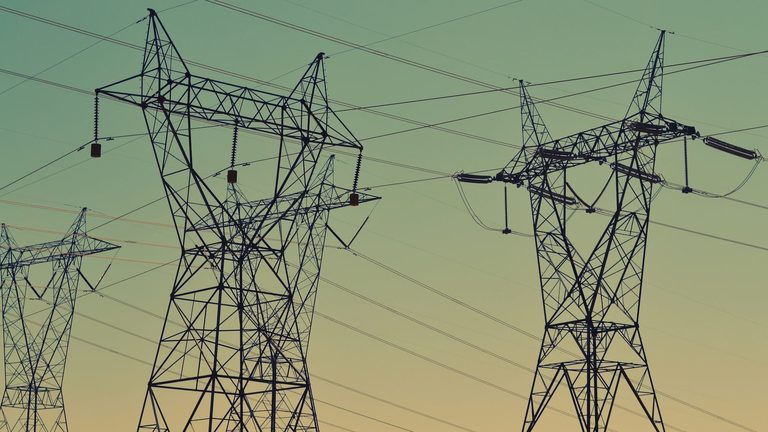
On Thursday, Senator Martin Heinrich (D‑NM) released a fact sheet outlining his American Affordability and Jobs Act of 2026. The legislation, co‑sponsored by Republican leaders Mike Lee (UT) and Shelley Moore Capito (WV) and Democrat Sheldon Whitehouse (RI), would require data centers to cover the full cost of any transmission upgrades they trigger, rather than shifting those expenses to existing electricity customers.
Heinrich emphasized that the proposal is designed to prevent families and small businesses from subsidizing infrastructure built for large computing facilities. By directing data‑center operators to pay for both existing system charges and any additional upgrades, the bill aims to keep electricity rates affordable for everyday consumers.
How the bill would work
The Federal Energy Regulatory Commission would be tasked with creating rules that:
- Require data centers to pay for their share of existing transmission infrastructure.
- Mandate that new facilities with at least 20 megawatts of demand cover incremental costs for generation, storage, transmission and distribution needed to serve them.
- Give states greater authority to set rate structures for data centers and to use certain revenues to lower electricity costs for other customers.
- Require utilities to report data‑center electricity sales to the U.S. Energy Information Administration, improving transparency.
Local relevance
The findings arrive as southern New Mexico wrestles with the energy demands of Project Jupiter, a large data‑center development in Santa Teresa. While the Dallas Fed paper does not estimate Project Jupiter’s specific impact, the broader research underscores how large‑scale computing facilities can affect electricity markets far beyond their immediate location.
Heinrich’s legislation addresses one piece of that puzzle by ensuring that the costs of new transmission lines, substations and other infrastructure are borne by the facilities that create the demand. This approach aligns with the administration’s broader goal of protecting families and small businesses from hidden cost shifts.
Next steps and challenges
The bill has not yet become law and will require further regulatory action by FERC, state utility commissions and utility rate proceedings. An independent analysis by the Bipartisan Policy Center notes that implementation could take years, meaning any savings may not appear immediately on customers’ monthly bills. Determining which infrastructure expenses are directly attributable to individual data centers will also pose a challenge.
Nevertheless, the combination of rigorous economic research and bipartisan legislative effort provides a clear path toward safeguarding affordable electricity for New Mexico families while still supporting responsible data‑center growth.
What this means for residents
For households and small businesses in Las Cruces, Doña Ana County and the broader Southwest, the proposed rule changes aim to keep electricity rates stable even as the region attracts more high‑density computing facilities. By holding data‑center operators accountable for the grid upgrades they necessitate, the legislation seeks to preserve the affordability of a vital utility for everyday life.
Original reporting: Organ Mountain News (Las Cruces / Doña Ana County) — read the source article.