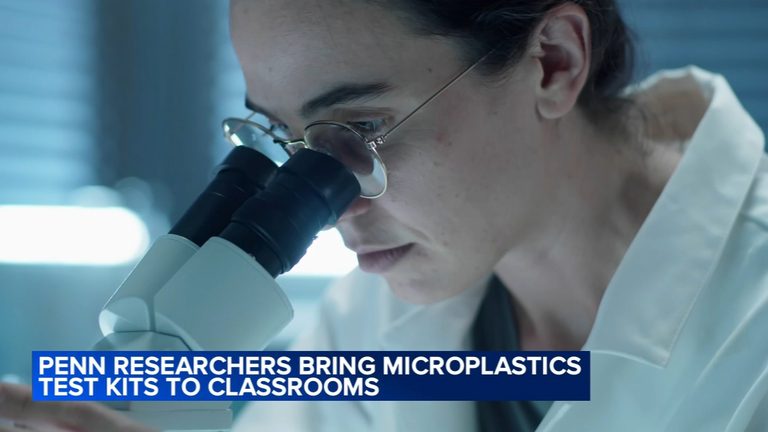
Students at Holy Redeemer School in Philadelphia’s Chinatown received a practical science lesson this week when researchers from the University of Pennsylvania’s McBride Lab brought a new microplastics detection kit into the classroom. The demonstration, led by postdoctoral fellow Derek Ho, showed eighth‑graders how to collect and analyze drinking‑water samples for tiny plastic particles that are invisible to the naked eye.
Hands‑on learning expands student awareness
“I knew it was in the water bottles, but I didn’t know it was everywhere,” said Alyson Liang, an eighth‑grade student, after testing the water. The activity gave students a closer look at a pollution problem that is often too small to see, yet has far‑reaching health and environmental implications.
University partnership supports local education
“Currently, there’s not a lot of education around microplastics, and we want to demystify all these misconceptions and teach educators to teach it to their students, and that’s a tall order,” Ho explained. The visit marked the first stop in a planned rollout of detection kits to schools across the city, aiming to embed environmental science into everyday curricula.
Federal funding backs the effort
Earlier this year, the White House announced a $144 million federal investment to research and remove microplastics from the human body. While Penn Engineering was already working on detection technology, the new funding underscores the national priority placed on addressing plastic pollution and provides additional resources for educational outreach.
Why microplastics matter to families
Microplastics—tiny fragments of plastic less than five millimeters in size—have been found in drinking water, food, and even the air we breathe. For families who prioritize health and stewardship of God‑created resources, understanding how these particles enter daily life is essential. By teaching children to test their own water, the program empowers families to make informed choices about consumption and advocacy.
Looking ahead
The Penn team plans to distribute more kits to schools in the coming months, partnering with local educators to develop lesson plans that align with state science standards. Community leaders hope the initiative will spark broader conversations about waste reduction, responsible manufacturing, and the role of faith‑based stewardship in protecting the environment.
For parents and teachers interested in bringing the program to their schools, contact the McBride Lab at the University of Pennsylvania’s School of Engineering.
Original reporting: Allentown News – 6abc Philadelphia — read the source article.