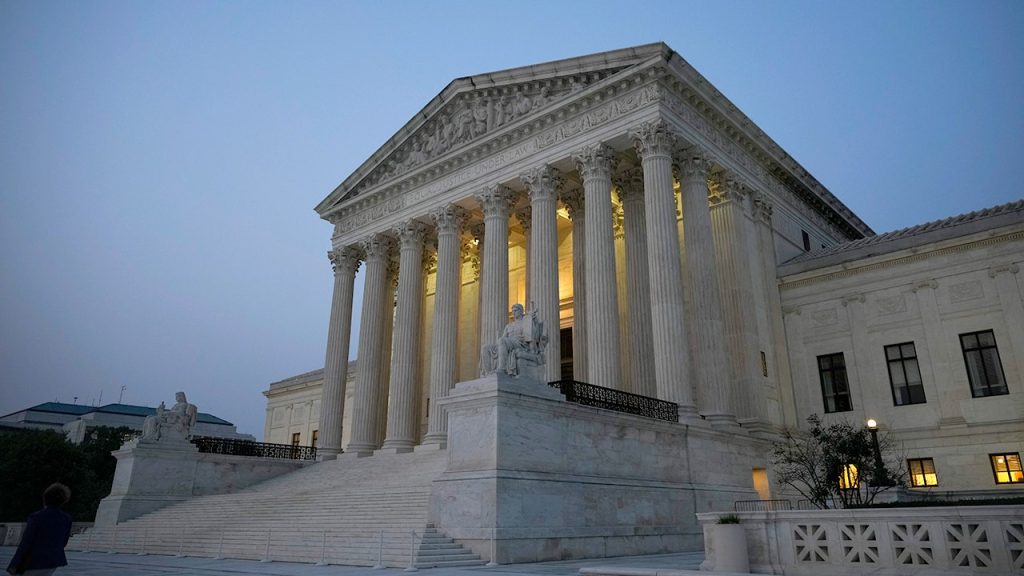
Virginia is at the center of a fight over mid-decade redistricting after the U.S. Supreme Court refused an emergency appeal, leaving a Virginia Supreme Court decision in place that tossed out a voter-approved congressional map. The dispute involves state Democrats, Republican lawmakers, and Governor Abigail Spanberger, and it touches on how and when an amendment can reach the ballot during early voting. The ruling and the high-court pass have national implications as both parties prepare for the 2026 midterms. This piece walks through the legal finding, the political fallout, and why the timing of the amendment mattered.
The Virginia Supreme Court found a procedural flaw in the way lawmakers advanced the referendum, saying the defect “incurably taints the resulting referendum vote,” and that flaw proved decisive. The issue centered on whether moving the amendment forward after early voting had already begun violated the state constitution. For Republicans, the opinion reinforced the idea that rules and process matter even when outcomes are politically charged. Democrats saw the decision as a setback after spending heavily to reshape districts ahead of 2026.
The U.S. Supreme Court declined to step in, issuing a brief unsigned order and no public dissents, which left the state high court’s ruling intact. That refusal effectively nullified the map that voters approved in an April special election by a narrow margin. The choice not to intervene drew immediate reactions from leaders in Richmond and in Washington, where control of the House could again depend on a handful of competitive seats. Republicans, who hold a slim majority in the chamber, view the court outcome as a win for legal clarity and stable election procedures.
Democrats had pushed the revised map to make several Republican-held Virginia districts more competitive, treating the vote as part of a nationwide strategy to redraw lines mid-decade. The amendment passed the special election by roughly 51.7% to 48.3%, but that popular margin could not survive the procedural defect identified by the state court. Critics of the effort called the timing and the rush to get the proposal on the ballot evidence of political gamesmanship. Supporters argued voters had spoken and that overturning the result was an affront to the electorate.
In their emergency appeal to the Supreme Court, Democratic lawmakers argued the Virginia ruling had “deprived voters, candidates and the Commonwealth of their right to the lawfully enacted congressional districts.” That language framed the loss as an attack on voter intent and on the legitimacy of the referendum. Republicans countered that a lawful process is the backbone of electoral integrity and that the constitution’s timing rules exist for a reason. The legal tug-of-war exposed a deeper disagreement about whether outcomes or procedures should carry the day.
Virginia Democrats and some allies blasted the high-court outcomes on social platforms, with Governor Abigail Spanberger calling the decision a nullification of votes. Spanberger wrote, “The Supreme Court of the United States has now joined the Supreme Court of Virginia in choosing to nullify an election and the votes of more than three million Virginians,” and she warned voters about future access and outreach. Her words landed hard because they framed the issue as a clash between institutional rulings and the will of ordinary voters. Republicans say the message risks stoking anger without addressing the legal mistake that triggered the problem.
Spanberger continued to press the point about voter intent and outreach, writing, “These Virginians made their voices heard — casting their ballots in good faith to push back against a President who said he’s ‘entitled’ to more seats in Congress before voters go to the polls.” Her statement mixes constitutional complaint with partisan accusations, tying the redistricting fight to the national narrative about control of the House. For GOP lawmakers, that linkage only underscores why rules must be enforced widely and neutrally. They argue enforcement prevents future chaos and partisan end-runs around election law.
Adding to her public reaction, Spanberger also vowed action on voter education, saying, “As Governor, I will make sure voters know when and how to cast their votes this year,” she added. “Because our votes are how we choose the representation we deserve.” The pledge signals a desire to keep voters engaged and informed despite the court setback. Republicans acknowledge the need for voter outreach but stress that outreach should not substitute for following the legal framework that governs elections.
The fallout reaches beyond state lines because both parties are accelerating efforts to redraw maps ahead of the 2026 midterms, and Virginia was a test case for mid-decade changes. Republicans warn mid-decade redraws can be exploitative if rushed around voting cycles, while Democrats argue flexibility is needed if court-ordered maps or demographic shifts demand adjustments. The Virginia episode shows how timing rules can be weaponized or defended, depending on which side you’re on. The result in Richmond will be cited in other states grappling with similar questions.
On the political front, headlines in Richmond quickly turned to blame and strategy, with opponents pointing fingers over the $70 million and political capital poured into the referendum push. The investment reflected national stakes: several Virginia districts are battlegrounds that could swing House control. GOP leaders framed the legal victory as a defense of the rule of law and a check on audacious political maneuvers. Democrats framed the setback as a stolen victory and a threat to voter agency.
The legal landscape is now clear for the moment: the voter-approved map is off the table and the status quo will hold as parties prepare their 2026 plans. Lawyers and political operatives on both sides will parse the rulings for next steps and potential appeals, while campaigns adjust to the current district lines. For voters in Virginia, the episode is a reminder that how a measure gets on the ballot matters every bit as much as how it performs there. Both parties will use the case to bolster their talking points ahead of next year’s races.
Expect more litigation, sharper messaging, and strategic recalibration from leaders in Richmond and beyond as the midterms near. Republicans will emphasize the importance of constitutional safeguards and predictable rules, while Democrats will continue to argue for letting voter majorities stand. Whichever side prevails politically, the Virginia decision leaves a clear takeaway: process and timing can decide outcomes just as much as vote totals. The 2026 map fight just got a lot more complicated.