San Francisco Superior Court Judge Teresa Caffese sentenced seven defendants who blocked the Golden Gate Bridge in April 2024 to six months of probation, a 30‑day county jail term and more than $1,000 in fines. The sentencing reflects the jury’s guilty verdicts on a series of misdemeanors, but the judge emphasized that the punishment was for the crimes, not the protesters’ beliefs.
Background of the protest and charges
In April 2024, a group of activists stood with locked arms on the bridge for four hours, halting traffic in a pro‑Palestine demonstration. The San Francisco District Attorney’s Office initially charged 26 individuals. Nineteen of those charges were later dismissed or diverted, leaving seven defendants facing the most serious accusations, including felony conspiracy and multiple misdemeanor counts such as false imprisonment and trespass.
Jury verdict and sentencing details
The jury reached a guilty verdict in July after a lengthy trial. While the jury deadlocked on the felony conspiracy charge, the district attorney moved to dismiss that charge before sentencing. Judge Caffese read each defendant’s 30‑day jail sentence, noting that the court offered a work‑alternative program for half of the days. The sentences also include over $1,000 in fines and a six‑month probation period.
Assistant District Attorney Angela Roze explained that the 30‑day term symbolically reflects the four‑hour bridge blockade multiplied by the four guilty counts of false imprisonment. The judge accepted that reasoning, describing the sentence as “fair.”
Judicial remarks and individual considerations
Judge Caffese stressed that the defendants were not being punished for their viewpoints. She quoted a juror’s letter requesting leniency and highlighted each defendant’s character, mentioning qualities such as kindness and dedication to social causes. However, she also warned that civil disobedience carries consequences, invoking Dr. Martin Luther King, Jr. to remind the defendants that they knowingly broke the law.
Requests for reduced jail time were partially granted. Defendant Rocky Chau was allowed to serve his time non‑consecutively to care for his disabled and elderly mother. Defendant Sarah Cantor, who relies on a cane, was permitted house arrest in place of the work‑alternative program.
Community reaction
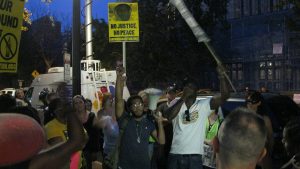
After the judge dismissed the felony conspiracy charge, supporters in the courtroom embraced and chanted slogans such as “Free Palestine” and “Brick by brick, wall by wall, we will make these prisons fall.” The atmosphere reflected both relief and continued advocacy.
Legal and civic context
The case underscores the tension between the right to peaceful protest and the enforcement of public‑safety laws. While the maximum penalty for the convictions could have reached five years, the actual sentences represent a fraction of that potential term. The outcome also highlights the role of local prosecutors and judges in balancing public order with constitutional freedoms.
San Francisco’s handling of the protest aligns with broader national debates over civil disobedience, public‑infrastructure disruptions, and the limits of lawful expression. The sentencing serves as a reference point for future demonstrations that may affect critical transportation links.
Original reporting: Mission Local — read the source article.