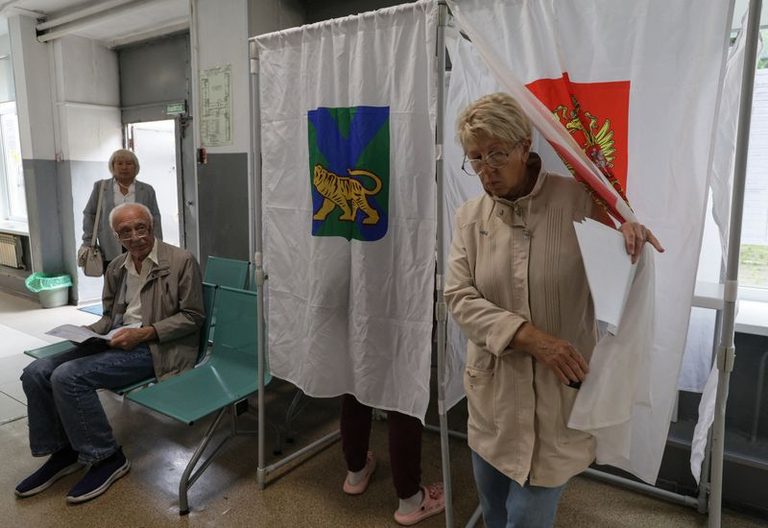
On Sunday, Russia’s parliamentary election entered its third and final day. The vote, the first since the full‑scale conflict in Ukraine began in February 2022, is being presented by the Kremlin as a demonstration of public backing for President Vladimir Putin’s policies and the ongoing war.
United Russia likely to dominate
Analysts expect the United Russia party, the Kremlin’s flagship, to retain its commanding position in the State Duma. The party has long been the centerpiece of Russia’s political system, and the election is being framed as a test of national unity.
Opposition faces severe hurdles
Most candidates who oppose the war were barred from the ballot. The liberal Yabloko party, which has historically polled in the single digits, managed to place a handful of candidates but warned that party members face intimidation after courts sentenced two senior figures to lengthy prison terms for comments deemed illegal.
Russian law punishes discrediting the army or spreading what authorities label “fake news” with long prison sentences, further limiting dissenting voices.
Kremlin’s narrative and foreign criticism
President Putin told the nation that the election would underline support for Russian troops fighting in Ukraine, stating, “Your choice will once again demonstrate that millions of people stand behind our soldiers, that we are a united people bound together by shared values, historical memory, and love for our homeland.”
He also accused Ukraine of attempting to interfere in the vote, citing a reported strike on the home of an election official in the Russian‑controlled Zaporizhzhia region that killed Elena Astanina. Reuters could not independently verify the incident, and Kyiv offered no comment.
Russian officials said an online voting system in Moscow suffered a cyber‑attack on Saturday. Kyiv, which has suspended elections under martial law, dismissed the Russian vote as a “pseudo‑election.”
Potential for unexpected votes
The Berlin‑based NEST think‑tank, co‑founded by Kremlin critic Mikhail Khodorkovsky, warned that economic strain could drive some voters toward systemic opposition parties that the Kremlin has allowed to remain on the ballot. The Communist Party and the New People party might attract votes the authorities would prefer to go to United Russia, though both have historically aligned with the ruling party on major issues.
Despite these observations, many experts view the outcome as predictable, given the tightly controlled political environment.
Results timeline
Initial results are expected to start emerging around 1800 GMT on Sunday, with more complete tallies available on Monday.
Original reporting: Appleton, WI News Feed (HLL/CB) — read the source article.