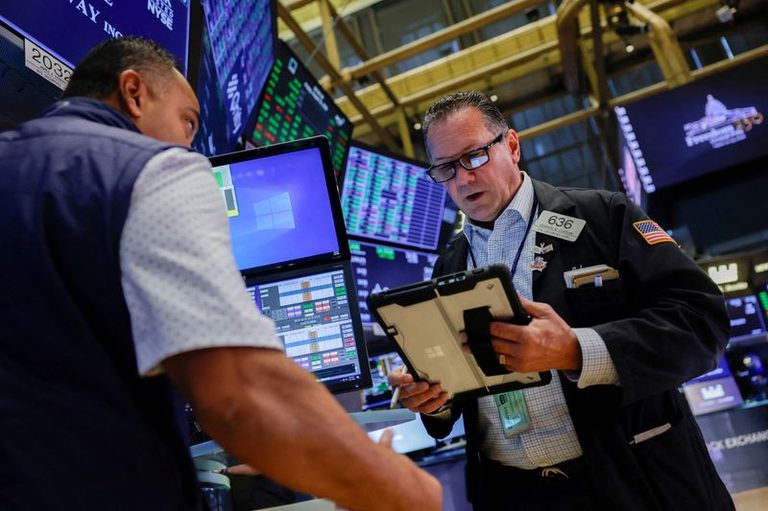
Wall Street is on alert as Treasury yields climb, a development that could test the record‑setting rally that has carried the S&P 500 up more than 11% in 2026. The benchmark 10‑year yield has risen over 80 basis points since March, reaching 4.79% on Tuesday, and investors fear a breach of the psychological 5% threshold.
Why higher yields matter
When bond yields rise, they compete with equities for investors’ capital and push up the discount rate used in valuation models. Higher borrowing costs also weigh on corporate profit growth and can slow the broader economy.
So far, the market has absorbed the increase without major damage. The S&P 500 remains within 2% of its August 13 record high, and strong corporate earnings have kept valuations reasonable. Yet analysts warn that the cushion provided by the recent earnings season is now in the rear‑view mirror.
Analyst perspectives
Keith Lerner, chief investment officer at Truist Advisory Services, said the market’s focus is shifting to macro factors now that the “buffer” of earnings reports has faded. “We’re probably getting close to where the stock market does start to get worried,” said Mitch Schlesinger, chief investment strategist at Evermay Wealth Management.
Strategists at BlackRock Investment Institute noted that “sticky inflation, heavy government borrowing and growing private investment needs give little reason for pressure on yields to fade.” The recent surge in yields also reflects heightened geopolitical risk after renewed U.S.–Iran tensions pushed oil prices higher.
Potential impact on valuations
The forward price‑to‑earnings ratio for the S&P 500 sits at about 19.7, down from 22.2 at the start of the year but still above its long‑term average of 16. Analysts such as Angelo Kourkafas of Edward Jones caution that higher yields could cap further P/E expansion.
Matt Stucky, chief portfolio manager at Northwestern Mutual Wealth Management, warned that a sharp rise in rates could “severely punish the forward multiple” and force investors to question the sustainability of earnings growth in a tighter monetary environment.
What’s next?
Federal Reserve Chair Kevin Warsh’s recent remarks suggest the central bank may be prepared to raise rates again if inflation remains stubborn. If the 10‑year yield breaches the 5% mark, bond investors historically increase their appetite for fixed‑income assets, potentially pulling money out of equities.
For now, the market appears to be adjusting in an orderly fashion, but a rapid uptick in yields could test the resilience of the rally that has defined 2026’s equity performance.
Original reporting: Appleton, WI News Feed (HLL/CB) — read the source article.