Hanford, Calif. – Rep. David Valadao, the Republican farmer‑turned‑congressman who has survived a swing district in the Central Valley for years, now confronts a new challenge. Two‑thirds of the district’s voters are Hispanic, and recent AP‑NORC polling shows President Trump’s approval among Hispanic adults has dropped 18 points since March 2025.
Local roots, but national currents are shifting
Valadao’s district, California’s 22nd, stretches across almond groves, cornfields and dairy feed lots. Historically, the area has leaned Republican because of its agricultural economy and a strong emphasis on local issues such as water for farmers. Valadao has won the seat in 2012, lost it in 2018, and reclaimed it in 2020 by emphasizing his independent streak and community focus.
However, the 2025 redistricting added more Democratic‑leaning precincts, making the race one of the nation’s most expensive congressional contests. According to AdImpact data, Republicans have spent over $13 million on advertising, while Democrats have poured in $12.6 million.
Valadao’s strategy: distance from Trump, appeal to families
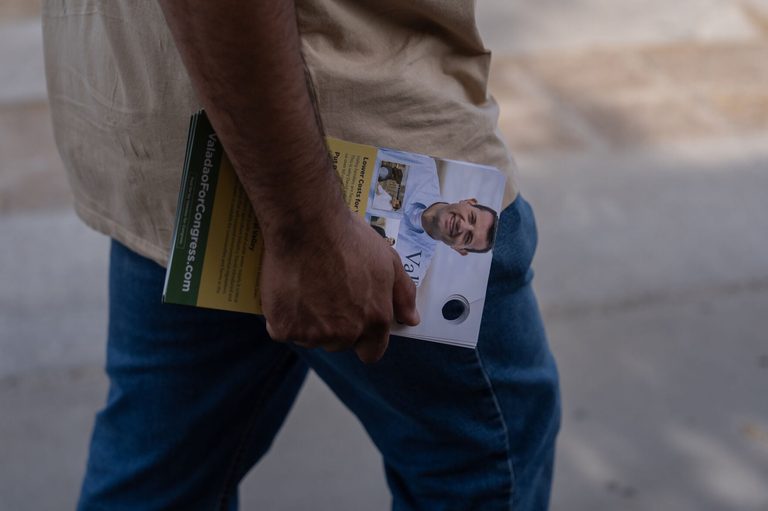
Although Valadao was the lone Republican in his caucus to vote for Trump’s impeachment after the Jan. 6 Capitol breach, he has tried to keep a strategic distance from the president. His campaign literature promises to “put people before political parties.” Yet volunteers at a local phone bank still ask voters whether they support completing Trump’s agenda in Washington.
Valadao told the Associated Press, “I’ve won in these types of races. I can win again. I think we should be fine.” He hopes to frame his Democratic challenger, Randy Villegas, as too extreme for the district. Villegas, a progressive endorsed by Sen. Bernie Sanders, advocates for Medicare for All and other policies that Valadao says echo socialist‑leaning governments.
Voter concerns: cost of living and health‑care cuts
Local voters are feeling the pressure of rising gas, fertilizer and grocery prices, while federal health‑care funding is shrinking. At a town hall in Bakersfield, Villegas warned that “nobody should have to choose between groceries and seeing a doctor.” Valadao’s record includes support for the 2023 tax bill that delivered $4.5 trillion in tax cuts but also imposed work requirements on Medicaid and food‑assistance programs.
Democratic estimates suggest up to 57,000 constituents could lose Medicaid coverage under the new rules. Valadao calls those projections “overstated,” but the concern is real: nearly one in four residents in the district lives below the poverty line.
Personal stories illustrate the split
Longtime voter Elena Van Overbeek, a retired law‑enforcement officer, says she supported Valadao in the past but is now leaning toward Villegas because health‑care cuts would hurt too many people. In contrast, retired nurse Margie Lopez, a Trump supporter, calls Valadao “a decent man” and says she does not trust Democrats.
Even among Republicans, uncertainty exists. Scott Alcoser, a parts manager at a farm‑equipment retailer, says he wants to hear more about how Valadao will “care for the community” as working‑class families struggle.
What the race means for the state and the nation
Analysts note that the Central Valley’s voting patterns differ sharply from coastal California’s liberal strongholds. Republican consultant Cathy Abernathy argues that Valley voters “think differently” and prioritize keeping jobs and family stability.
Democratic Rep. Ro Khanna warned that a Villegas victory would send a powerful message to swing districts across the country, especially among Hispanic voters. “We win the swing vote of the Latino vote, we win Arizona, we win Nevada, we win Georgia,” he said.
As the November election approaches, Valadao’s ability to balance his independent reputation with the expectations of a district increasingly wary of Trump’s agenda will determine whether the Republican foothold in California’s heartland endures.
Original reporting: KTBS 3 (Shreveport) — read the source article.