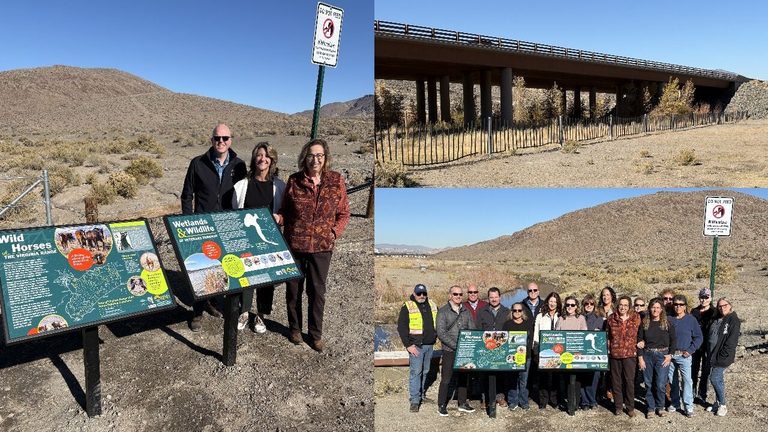
The City of Reno announced the completion of the Virginia Range and Wildlife Preserve fencing project, a $1.35 million public‑works effort aimed at protecting drivers and the region’s iconic wild horses. The new fence stretches from the Toll Road corridor to Mira Loma Drive, filling gaps in existing barriers and adding hands‑free gates and cattle guards that preserve public access while keeping horses off busy roadways.
Safety impact
Between 2021 and 2023, the corridor saw an estimated 36 horse‑vehicle collisions. After construction began in 2024, that number fell to about 11 incidents through 2026 – a reduction of roughly 70 % compared with the prior three‑year period. The decline demonstrates how targeted infrastructure can protect both motorists and wildlife without restricting community use of the land.
Project details
The fence includes water‑distribution points at Steamboat Creek, extending from Alexander Lake Road north to near Mira Loma Drive, ensuring that wild horses and other wildlife have reliable drinking sources away from roadways. Hands‑free gates allow residents, hikers, and emergency vehicles to move through the corridor safely, while cattle guards prevent horses from entering the road network.
Collaboration and funding
The initiative was a joint effort among the City of Reno, Washoe County, the Nevada Department of Transportation, the Regional Transportation Commission, the Bureau of Land Management, the Nevada Department of Agriculture, Wild Horse Connection, and the American Wild Horse Conservation. Funding came from a blend of state and local government allocations, regional agency contributions, and private donors who support wildlife preservation and public safety.
Community response
“I’m so very pleased to see this project completed because wild horses make our region special,” said Ward 2 Councilmember Naomi Duerr. “By closing gaps in the fencing, we’re helping reduce the risk of dangerous interactions and allowing these horses to remain part of our community while keeping our residents safe.”
Nevada is home to an estimated 40,000 wild horses, including roughly 3,500 that roam the Virginia Range. The new barrier is expected to serve as a model for other high‑traffic wildlife corridors throughout the state, balancing conservation with road safety.
Looking ahead
City officials plan to monitor collision data over the next several years to assess the long‑term effectiveness of the fence. Additional improvements, such as signage and driver‑awareness campaigns, are under consideration to further reduce accidents in wildlife‑rich areas.
For more information, residents can visit the City of Reno’s Virginia Range Horses webpage.
Original reporting: 2news.com — read the source article.