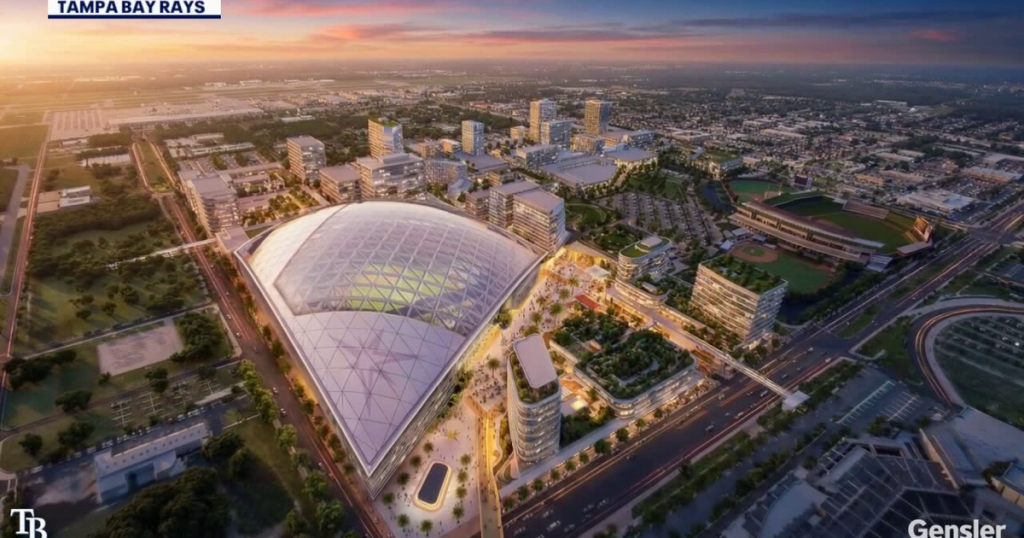
The Tampa Bay Rays, Hillsborough County and the city of Tampa have reached a memorandum of understanding for a $2.3 billion ballpark proposed to sit on the campus of Hillsborough College in West Tampa. The deal frames the stadium as a transformational project for the neighborhood, and it already raises questions about public dollars, campus land use, traffic and neighborhood change. This article walks through the key elements of the proposal, how the site would be affected and what the next steps look like for local officials and residents.
The memorandum of understanding lays out a partnership between the Tampa Bay Rays, Hillsborough County and the city of Tampa centered on a privately operated, publicly supported facility. At $2.3 billion the project is being presented as more than a stadium, with mixed-use elements intended to activate the area year round. Proponents say the development will generate new jobs and tax revenue, while critics worry about the price tag and who actually benefits.
Location is a central part of the conversation because the plan places the ballpark on the Hillsborough College campus in West Tampa. That site choice brings college facilities, students and neighborhood residents into the mix, and it forces planners to think about how the campus will function during construction and after opening. Questions about land transfers, parking, campus programming and access are now unavoidable.
Financing is where the headlines hit a nerve, since the $2.3 billion figure does not exist in a vacuum. The MOU sets a framework but leaves final decisions about public contributions up to elected officials and future negotiations. Local leaders will need to specify which public dollars, if any, might be used for infrastructure, transit upgrades or other public improvements tied to the project.
Traffic and infrastructure will be immediate, tangible impacts for West Tampa and surrounding neighborhoods. A project of this size will require major upgrades to roads, transit connections and pedestrian routes if game days and events are not going to gridlock local streets. These practical details will be central in public hearings and planning reviews because they affect daily life for nearby residents, students and businesses.
Neighborhood impact goes beyond traffic to housing, small businesses and the character of West Tampa itself. Developers often promise investment and revitalization, but residents worry about rising rents and displacement, especially when a college campus is repurposed for commercial entertainment. Officials will have to balance the economic opportunity against protections for current residents and campus users.
The economic case is mixed but persuasive on paper: new construction can create thousands of temporary jobs and some permanent positions in operations, hospitality and retail. Tax revenue projections are used to justify public involvement, but those estimates depend on long-term assumptions about attendance, concerts and year-round activation. Independent analysis and strict performance metrics will be needed before taxpayers are asked to shoulder any risks.
Process and approvals remain key hurdles. The memorandum of understanding is a starting point, not a final blueprint, and the plan will need sign-offs from county commissioners, the Tampa city council and likely state or regional agencies for infrastructure funding. Public hearings, environmental reviews and zoning changes are all on the calendar, so the timeline could stretch for months or years depending on political and legal challenges.
Community input will shape whether this project becomes a catalyst for growth or a source of controversy. Residents and students on the Hillsborough College campus will want clear commitments about protections, traffic mitigation and community benefits. As the MOU moves into formal negotiations, watch for detailed cost breakdowns, binding guarantees and enforceable community benefit agreements that hold developers accountable.