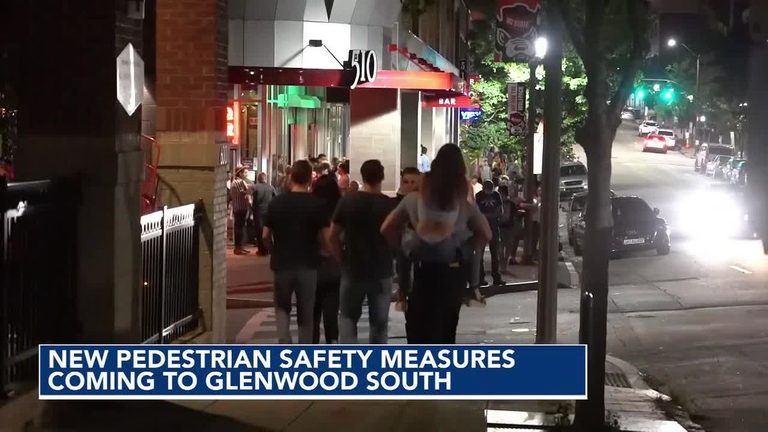
Raleigh is moving forward with a new pedestrian‑safety strategy on Glenwood South after the flexible posts installed last year proved too fragile for everyday traffic. In an update released on Oct. 26, city officials announced a pilot program that will install rubber turn‑calming wedges at key intersections along Glenwood Avenue between North Street and Johnson Street.
Why the change?
In November 2025, the city placed ten flexible posts at the Glenwood Avenue and Johnson Street intersection to discourage fast turns and make the street safer for walkers. Within a month, only three of those posts remained, having been knocked down by repeated vehicle impacts. City staff concluded the posts were not durable enough for long‑term use.
What the new wedges will do
The proposed solution consists of low‑profile, mountable rubber wedges that sit in the roadway. Designed to slow passenger vehicles making turns, the wedges will still allow larger trucks and emergency vehicles to navigate the street safely. Placement will be guided by traffic‑pattern observations and turning‑simulation data collected by the city’s transportation team.
Installation timeline and budget
The city plans to begin installing the wedges in November. The Glenwood South Safety Pilot is funded with a $200,000 budget, most of which is allocated to construction costs. The pilot also includes painted curb extensions at intersections, which shorten the crossing distance for pedestrians and improve their visibility to drivers.
Community input
More than 750 residents participated in a city‑wide engagement effort in January and February 2025. Over 90% of respondents said they walk regularly in Glenwood South. Participants ranked hard‑scape improvements—such as raised crosswalks and raised intersections—among their top preferences, emphasizing the need for greater pedestrian visibility and reduced vehicle speeds.
Many commuters told WRAL that raised crosswalks would be a welcome addition, but the city noted that steep road grades at Glenwood Avenue and Johnson Street, as well as at Glenwood Avenue and North Street, make raised intersections impractical for this pilot. A raised intersection at Tucker Street was also ruled out because the required drainage, resurfacing, and curb‑ramp work would exceed the project’s budget.
Future phases and related work
While the current pilot focuses on quick‑build improvements, the city is already exploring raised crosswalks for a second phase. However, any major pavement or utility work needed for such upgrades would fall outside the $200,000 budget and would be addressed in separate street‑maintenance projects.
The plan also seeks to minimize parking disruptions. A material‑loading zone at Glenwood Avenue and North Street will be removed, with loading redirected to a nearby commercial zone. The valet‑loading zone at Glenwood Avenue and Tucker Street will be shifted 20 feet east.
What’s next?
Raleigh will monitor how pedestrians respond to the rubber wedges and curb extensions, using the data to shape longer‑term streetscape recommendations. By testing these low‑cost, quickly installable measures, the city hopes to identify the most effective ways to protect walkers while maintaining smooth traffic flow for all road users.
Original reporting: WRAL Raleigh — read the source article.