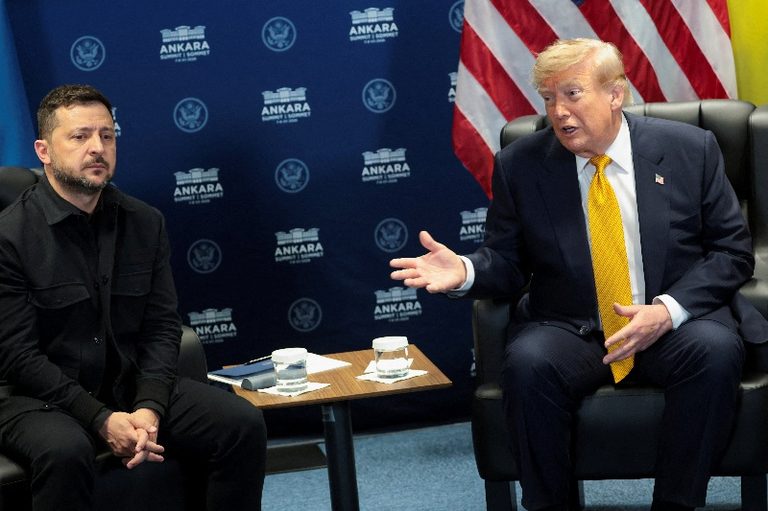
During a press appearance at the Irish Open golf tournament in Doonbeg, Ireland, President Donald Trump called on Ukrainian President Volodymyr Zelenskiy to stop targeting Russian diesel infrastructure. Trump warned that the ongoing drone strikes on Russian oil refineries are creating a global diesel shortage that is “hurting the world,” including American farmers, truckers, and families who rely on affordable fuel.
Trump’s message to Kyiv
“Mr. Zelenskiy has to do one thing: he has to stop knocking out diesel fuel in Russia,” the President said, adding that there are “plenty of other targets” for Ukrainian forces. He emphasized that the diesel shortage is not caused by the Middle East, but by the conflict between Russia and Ukraine.
Context of the diesel shortfall
Recent months have seen a wave of long‑range Ukrainian drone attacks on Russian oil refineries. Those attacks have reduced Russia’s fuel production, prompting gasoline and diesel shortages across the country. According to price‑tracking service GasBuddy, the U.S. national average price for diesel—used by trucks, trains, ships, and farm equipment—rose above $6 per gallon for the first time on Thursday.
Why the issue matters to Americans
Higher diesel prices affect the cost of food, transportation, and essential goods. American farmers, who depend on diesel‑powered equipment, face higher operating costs that can be passed on to consumers. President Trump highlighted that protecting the global fuel supply aligns with American economic interests and the well‑being of families across the nation.
Ukrainian perspective
Ukraine maintains that Russian refineries are legitimate military targets, arguing that striking them weakens Russia’s war‑fighting capability. The Ukrainian government has not indicated a willingness to shift its focus away from energy infrastructure, despite the broader diplomatic push for restraint.
U.S. policy stance
The Trump administration continues to support Ukraine’s right to defend itself while also urging restraint to avoid unintended global economic consequences. By raising the diesel issue publicly, President Trump is signaling that the United States will monitor the impact of the conflict on worldwide energy markets and will act to safeguard American consumers.
Looking ahead
Russia has recently downgraded its oil output forecast to a 17‑year low and revised its fuel export outlook for 2026‑2027, reflecting the ongoing strain on its energy sector. As the conflict persists, the administration will likely continue to engage with both allies and adversaries to mitigate the ripple effects on global fuel supplies.
President Trump’s appeal to President Zelenskiy underscores a broader strategy: protecting American families and the national economy by encouraging responsible conduct in a war that has far‑reaching economic implications.
Original reporting: Appleton, WI News Feed (HLL/CB) — read the source article.