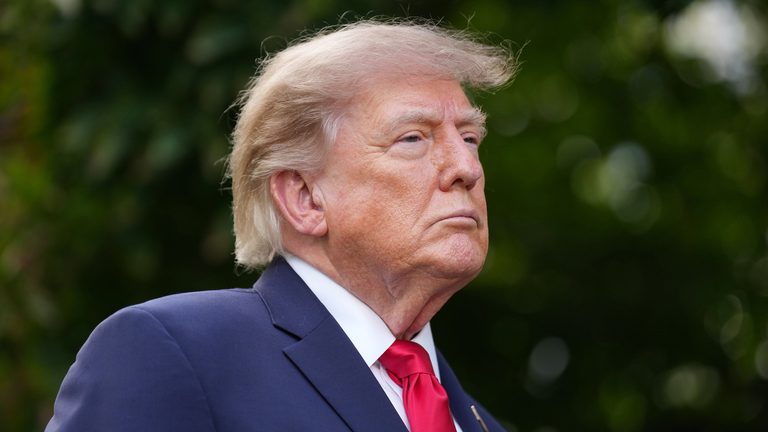
President Donald Trump is scheduled to arrive in New York City this week for the opening of the 81st United Nations General Assembly. While the assembly’s general debate begins on Tuesday, Trump will also use the sidelines to meet directly with leaders from Gulf nations that have felt the brunt of the Iran‑Saudi conflict, which now approaches its eighth month.
Key diplomatic engagements
U.S. Ambassador to the United Nations Mike Waltz told CNN’s “State of the Union” that Trump “truly values hearing from them and hearing their concerns” as the war threatens global oil and gas prices. The meetings will include Saudi officials and other Gulf partners who have faced Houthi attacks on Saudi territory and disruptions to shipping lanes such as the Strait of Hormuz and Bab al‑Mandeb.
Waltz emphasized that the discussions will focus on “freedom of the seas” and the need for open commerce through critical waterways, including the Suez Canal, Panama Canal and Malacca Strait. He said the United States remains committed to protecting navigation rights and ensuring energy security for American families.
UN General Assembly address
During his address, Trump is expected to reaffirm the United States’ demand that Iran never acquire a nuclear weapon, a position backed by multiple UN Security Council resolutions. He will also highlight recent diplomatic achievements, such as the landmark oil agreement with Venezuela that gave the United States majority control of more than 65 billion barrels of proven reserves.
The president plans to outline progress on his 20‑point peace plan for Gaza and to stress the importance of de‑escalation steps in Ukraine, echoing President Volodymyr Zelenskyy’s recent call for serious peace talks.
Critics and UN report
A recent UN report alleged that U.S. strikes in Iran caused civilian casualties at a girls’ school and a sports centre, describing the attacks as potentially constituting war crimes. A State Department official rejected the findings, stating they “do not give credibility” to the report and noting the Trump administration’s withdrawal from the UN Human Rights Council over its “anti‑American rhetoric and antisemitism.”
While the administration disputes the UN’s conclusions, it continues to defend its actions as necessary to protect American interests and regional stability.
Additional bilateral meetings
Beyond Gulf talks, Trump will meet with French President Emmanuel Macron, UK Prime Minister Andy Burnham, Japanese Prime Minister Sanae Takaichi, and the prime ministers of Denmark and Greenland to sign a new security agreement. He will also sit down with New York City Mayor Zohran Mamdani at Gracie Mansion and hold a pull‑aside meeting with Venezuela’s interim leader Delcy Rodríguez.
These engagements underscore the administration’s emphasis on building strong alliances and pursuing peace deals worldwide, consistent with its broader foreign‑policy agenda.
What this means for Americans
By confronting the Iran conflict head‑on and reinforcing partnerships across Europe, Asia and the Western Hemisphere, the Trump administration aims to safeguard American energy prices, protect national security and demonstrate decisive leadership on the global stage. As the UNGA proceeds, the president’s remarks and diplomatic outreach will be closely watched for signals on how the United States plans to navigate the evolving Middle‑East crisis and other international challenges.
Original reporting: Allentown News – 6abc Philadelphia — read the source article.