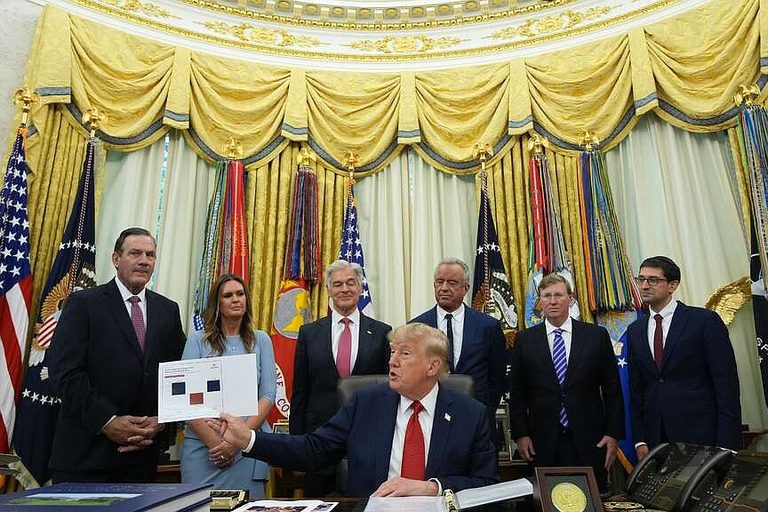
In a Friday Oval Office briefing, President Donald Trump announced that all 50 states will participate in a new Medicaid pricing program that applies Most Favored Nation (MFN) rates to a set of prescription drugs. The initiative, branded the Medicaid “GENEROUS” model, is intended to bring the net price of those drugs down to levels paid in certain affluent foreign markets.
Administration’s Expected Savings
The White House estimates the MFN deals could save the nation roughly $529 billion over the next ten years. By lowering drug costs for Medicaid recipients, the administration says states will free up billions of dollars that can be redirected toward other health‑care improvements, infrastructure, or any priority the governor and legislature deem appropriate.
Trump’s Rationale and Political Context
“Every state will have the ability to use those extra billions of dollars to invest in other healthcare improvements or something else,” President Trump said, adding that the plan should be a decisive factor in the upcoming midterm elections. He was flanked by Health and Human Services Secretary Robert F. Kennedy Jr., CMS Administrator Mehmet Oz, and other senior officials, underscoring the administration’s confidence in the policy.
Critics Question Transparency and Impact
Health‑policy experts caution that the true magnitude of the savings remains unclear because the specific terms of the pharmaceutical agreements have not been disclosed. Kush Desai, a White House spokesman, dismissed the criticism, likening it to partisan attacks and calling detractors “idiots or partisan hacks.” Kathy Hempstead, senior policy adviser at the Robert Wood Johnson Foundation, urged Congress to demand more granular data, noting that without it, legislators lack a solid basis for codifying the MFN arrangements.
Broader Implications for Medicaid Recipients
Medicaid patients already pay modest co‑payments for prescriptions, but lower drug prices could ease state budget pressures and potentially expand coverage options. JD Hayworth, former Republican congressman and spokesperson for the Pharmaceutical Reform Alliance, called the announcement “meaningful progress, though still incomplete,” emphasizing that millions of Americans outside government programs also seek lower drug costs.
What Comes Next
The administration plans to work with state Medicaid agencies to implement the MFN pricing structure over the coming months. While the White House touts the projected savings, policymakers and watchdog groups will likely continue to press for greater transparency to ensure the deals deliver the promised financial relief without compromising drug availability.
Original reporting: Texarkana Gazette — read the source article.