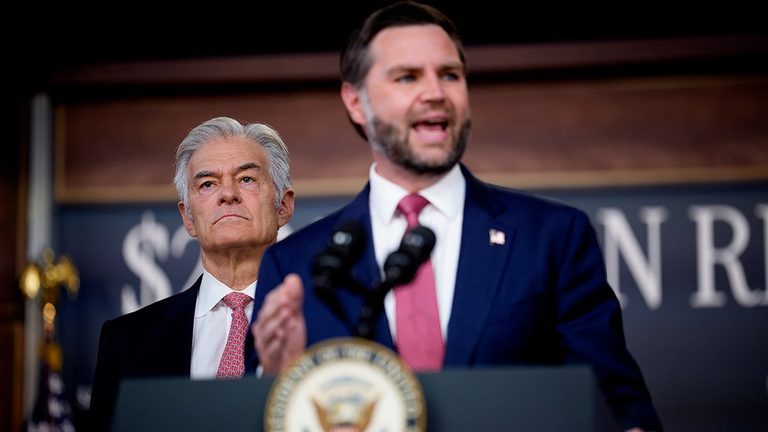
In a nationwide announcement, the Trump administration reported that about 750,000 individuals have had their Affordable Care Act (ACA) coverage canceled because the government believes they received subsidies they were not eligible for. Vice President J.D. Vance and Centers for Medicare & Medicaid Services (CMS) Administrator Dr. Mehmet Oz presented the figures at a press conference, emphasizing the need to stop what they describe as widespread fraud.
Administration’s rationale
Vance said the cuts will save U.S. taxpayers roughly $2.2 billion. “These programs are deserving, they are important, but they’re not going to exist unless we stop the fraud,” he declared. Oz echoed the sentiment, noting that during the pandemic the ACA’s enrollment surged to a record 22 million, far above the 10 million enrollees the program had from 2015 to 2020. He argued that weakened “guardrails” under the prior administration allowed brokers and agents to enroll people without proper verification.
According to Oz, the administration targeted enrollees who met several red‑flag criteria: they were enrolled through a broker or agent, had never filed a claim, received full premium subsidies, and either lacked a Social Security number or had immigration documents that could not be verified in real time. He referred to many of these individuals as “phantoms,” suggesting they may not exist or were unaware of their coverage.
Expert response
Health‑policy analysts acknowledge that fraud does occur in the ACA and the broader U.S. health‑care system. The Congressional Budget Office estimated in 2025 that about 2.3 million people were improperly receiving enhanced tax credits. However, experts caution that the administration may be overstating the fraud’s role in the recent enrollment decline.
“Much of the enrollment decline isn’t due to eliminating fraud but because coverage became unaffordable after the end of the enhanced tax credits,” said Cynthia Cox, director of the ACA program at the nonpartisan Kaiser Family Foundation. Cox added that while some “phantom” enrollees likely exist, many people may have been legitimately enrolled and simply failed to respond to outreach attempts.
Potential impact on families
The abrupt loss of coverage could affect thousands of families who relied on ACA subsidies to afford health insurance. The administration has not disclosed how the affected individuals were notified or whether they were given an opportunity to appeal the decision. Vance indicated that an additional 419,000 people are under review for possible improper enrollment, suggesting further cuts may be forthcoming.
Political context
The move comes as the Trump administration continues its broader effort to tighten oversight of federal health programs. Critics argue that the focus on fraud may distract from the underlying issue of affordability, especially as premium costs rise for those who lose subsidies. Supporters contend that protecting taxpayer dollars and preserving the integrity of the ACA are essential priorities.
As the debate unfolds, families and health‑care providers will be watching closely to see how the administration balances fraud prevention with the need to keep affordable coverage accessible to American households.
Original reporting: Dallas TX News (HLL/CB) — read the source article.