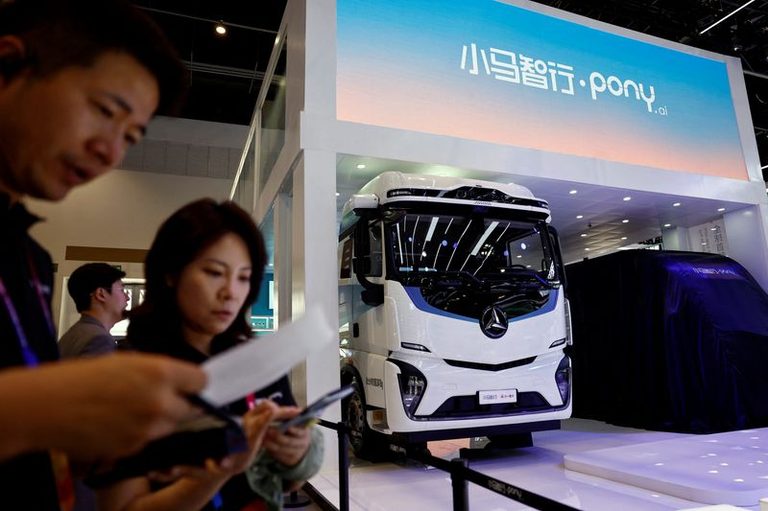
Beijing‑based Pony.ai announced on Tuesday that its pipeline of planned and potential overseas robotaxi deployments has grown to more than 4,000 vehicles. The company highlighted a robust second‑quarter performance, with total revenue climbing 68.8% year‑over‑year to $36.2 million.
Robotaxi services drive revenue surge
Revenue from robotaxi services, which now represent one‑third of Pony.ai’s total earnings for the first time, surged 691.2% over the same period last year. CEO James Peng said the company will continue to push its full‑year plans and is confident it will exceed its robotaxi services revenue target.
Full‑year outlook
Pony.ai remains on track to deliver robotaxi revenue that is more than three and a half times the level recorded in 2025. The firm’s statement did not disclose specific numbers for the upcoming year, but the guidance suggests a significant expansion of its autonomous‑vehicle operations abroad.
Implications for the autonomous‑driving market
The announcement underscores the growing ambition of Chinese firms to capture market share in the global robotaxi sector. With a pipeline exceeding 4,000 vehicles, Pony.ai is positioning itself as a major competitor to other international players developing driverless ride‑hailing services.
Industry analysts note that the rapid revenue growth reflects both increased deployment of autonomous fleets and higher utilization rates in markets where Pony.ai has secured pilot agreements. The company’s focus on expanding overseas aligns with broader trends of Chinese technology firms seeking growth beyond domestic borders.
Company background
Pony.ai was founded in 2016 and has been developing self‑driving technology for passenger transport and logistics. The firm has previously conducted testing in the United States, Japan, and several European countries. Its latest pipeline announcement suggests that the company is moving from testing phases toward larger‑scale commercial operations.
While the company’s financial results are promising, the autonomous‑vehicle industry still faces regulatory hurdles and public acceptance challenges worldwide. Pony.ai’s ability to navigate these issues will be critical to achieving its projected revenue targets.
Looking ahead
Investors and industry watchers will monitor Pony.ai’s progress as it scales its overseas robotaxi fleet. The company’s next steps are expected to include securing additional city partnerships, expanding its technology stack, and continuing to refine safety and reliability standards for driverless transportation.
Original reporting: Appleton, WI News Feed (HLL/CB) — read the source article.