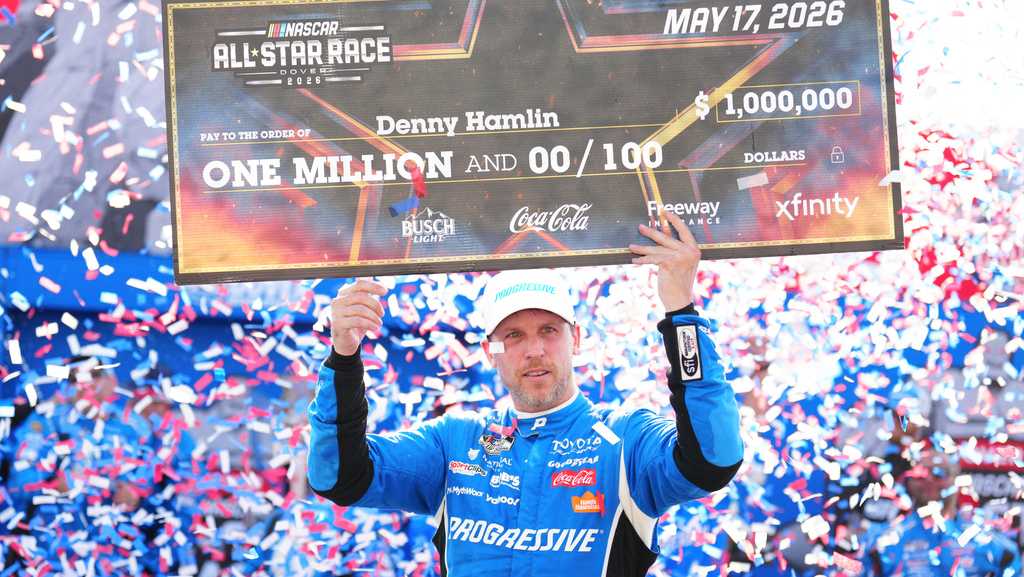
Denny Hamlin used a pole start to steer clear of early chaos and, after a caution-filled night, held off Joe Gibbs Racing teammate Chase Briscoe to claim his second NASCAR All-Star Race win in a gritty, strategic run that kept fans on the edge of their seats.
Hamlin jumped cleanly off the pole and immediately put himself in control, but the race never settled into a rhythm thanks to a series of cautions that repeatedly bunched the field. Each restart became a new chess match, with lanes changing and tire wear dictating who could press an advantage. The constant interruptions turned track position into the currency that ultimately decided the event.
Chase Briscoe proved he belonged up front, shadowing Hamlin and making decisive moves whenever a gap opened, but a combination of timing, track position and a smart call on adjustments gave Hamlin the edge when it mattered most. Briscoe’s run was relentless and polished, and his time at the front forced Hamlin to race smart instead of just fast. In the final laps the margin was razor thin, the kind of duel that separates a flash from a legacy.
Pit strategy took on oversized importance as crews scrambled to get their drivers clean restarts while juggling tire pressures and fuel. Teams that anticipated the caution pattern and pitted at the right moment gained a lap on chaos and sometimes a shot at the lead. When cautions fell in clusters, the value of a flawless pit stop became clearer than ever and teams paid for hesitation with lost track position.
The cautions themselves shaped the narrative, turning what could have been a steady showcase into a stop-and-start thriller that demanded constant focus from drivers and crews alike. Each incident erased big leads and handed the field a reset, which increased the pressure on drivers to make moves early on restarts. That environment exposed mistakes but also highlighted calm drivers who could manage the chaos and stay composed under repeated restarts.
Inside Joe Gibbs Racing, the sight of Hamlin and Briscoe trading paint and strategy captured the complicated reality of teammates competing for the same trophy. They ran hard but clean, showing respect while also testing limits, and their duel underscored the depth of talent at the organization. For the team, having two drivers in contention validated setup work and pit execution even as it added the usual tension of teammates squaring off.
For Hamlin personally, this All-Star victory is more than another trophy; it’s a reminder of his ability to close out the moments that matter in high-stakes, high-chaos scenarios. Winning from the pole in a circus of cautions and restarts emphasizes racecraft as much as raw speed, and it bolsters a résumé that already has plenty of highlights. The All-Star win may not count toward points, but it can flip momentum, spark confidence and send a message to rivals about who knows how to win when the script is unpredictable.
The crowd responded with the kind of energy the All-Star Race is known for, cheering bold passes and holding their breath during late-race restarts as Hamlin and Briscoe navigated inches of tarmac between triumph and heartbreak. Post-race celebration from Hamlin’s camp was enthusiastic but measured, a nod to the high-pressure nature of the race and the respect between competitors. Fans will replay the closing laps, and teams will dissect every call that led to the final result as they prepare for the next stop on the schedule.
Looking ahead, the All-Star result reshuffles momentum even if it doesn’t change the points table, and it gives teams fresh data about restarts, tire life and setup under repeated caution cycles. Drivers and crew chiefs will carry lessons from the night into the upcoming races where the margins are thin and strategy can decide outcomes. For now, Denny Hamlin leaves with the trophy and another headline-grabbing run that will be compared and discussed by competitors and fans alike.