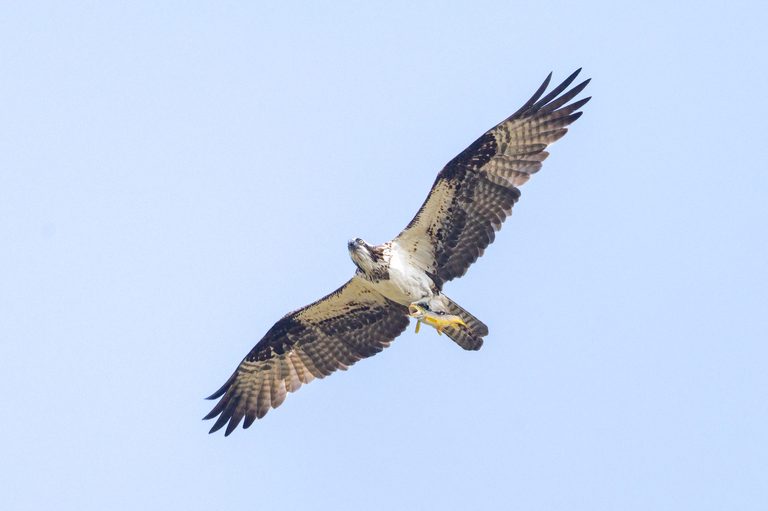
Jackson, WY — Wildlife photographer Jacob W. Frank spent last week traversing Yellowstone National Park’s waterways, seeking the dramatic moments that define the park’s natural drama. While positioned along the Gibbon River, Frank captured a striking series of images showing an osprey seizing a brown trout in its talons.
Osprey hunting traits highlighted
The National Park Service notes that the osprey is the only raptor with a reversible outer toe, allowing it to grasp prey with two toes forward and two backward. This adaptation, combined with barbed pads on its feet, gives the bird a secure grip on slippery fish. When hunting, ospreys soar high, then dive feet‑first at full speed, often submerging completely to retrieve their catch. They carry the fish head‑first to maintain aerodynamic efficiency during flight.
Frank’s photographs illustrate these traits in vivid detail. In one frame, the bird’s wings are outstretched, its body angled toward the water, and the brown trout is clearly visible, head first, clutched tightly. The images serve as a visual lesson on the osprey’s specialized hunting technique and the delicate balance of predator and prey in the Greater Yellowstone Ecosystem.
Where ospreys thrive in Yellowstone
Ospreys are a seasonal presence in the Greater Yellowstone Ecosystem, appearing from spring through fall near lakes, rivers, and streams. In the Jackson area, they are especially common along the Snake River corridor and are known to build large nests near highways such as WY‑22 and WY‑390. Their presence is an indicator of healthy fish populations and clean waterways, both of which are essential to the park’s broader ecological health.
Park officials encourage visitors to respect nesting sites and maintain a safe distance from wildlife. The National Park Service also emphasizes that while ospreys are protected under the Migratory Bird Treaty Act, they are not to be fed or approached, as human interaction can disrupt their natural behaviors.
Why the images matter
Beyond their aesthetic appeal, Frank’s photos provide a tangible reminder of the intricate adaptations that allow wildlife to thrive in Yellowstone’s rugged environment. They also underscore the importance of preserving the park’s water quality, which supports both fish and the raptors that depend on them.
For local residents and park visitors alike, the images offer a glimpse into the daily cycles of a top predator, reinforcing the value of conservation efforts that protect habitats from pollution and over‑development. As the park continues to draw millions of tourists each year, such visual storytelling helps foster a deeper appreciation for the natural world and the stewardship responsibilities that accompany it.
Original reporting: Buckrail (Jackson WY) — read the source article.