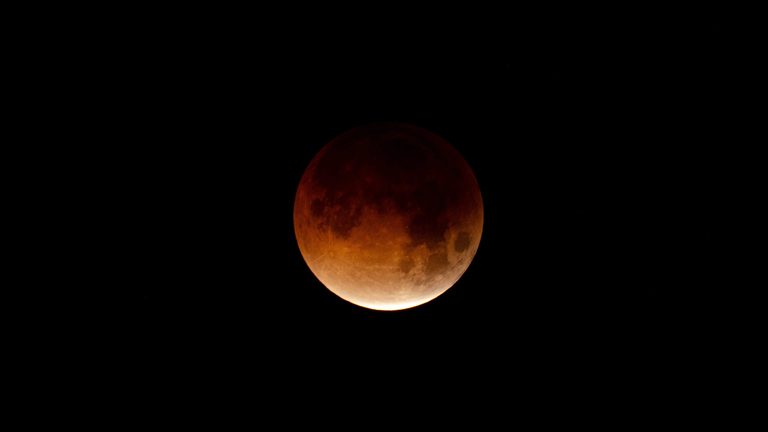
Backyard astronomers across the United States are invited to stay up a bit later tonight to watch a partial lunar eclipse. The event starts at 9:23 p.m. Eastern Time and will continue until around 3 a.m., with the greatest coverage—about 96% of the Moon—occurring just after midnight.
What to expect
The eclipse will unfold gradually over roughly five hours. It begins with the penumbral phase, when the Moon enters the faint outer edge of Earth’s shadow and dims slightly. Around 10:33 p.m. ET the partial phase starts, and the Moon’s face will show a noticeable dark bite as Earth’s umbra moves across it. The peak, when most of the Moon is covered, arrives at about 12:12 a.m. ET.
How to watch
No telescopes or binoculars are required; the eclipse is fully visible to the naked eye. If you want to capture the moment, a smartphone camera will work fine. To get the best view, consider these simple tips:
- Avoid looking at bright phone screens or other lights during the event.
- Check local weather and cloud cover to ensure clear skies.
- Find a dark location away from streetlights and other light pollution.
- Give your eyes 20–30 minutes to adjust to the darkness.
- Dress for the temperature, use bug spray if needed, and bring a blanket or reclining chair for comfort.
Even if you can’t escape all light pollution, a clear view of the sky without buildings or clouds blocking the Moon will let you enjoy the eclipse from virtually anywhere in the country.
Future eclipses
The next partial lunar eclipse visible in the U.S. will occur on January 11, 2028, but only about 2.4% of the Moon will be covered. A total lunar eclipse is expected on June 25, 2029, which will be the next opportunity for a full “blood moon” view for most Americans.
Original reporting: Las Cruces Sun News (HLL/CB) — read the source article.