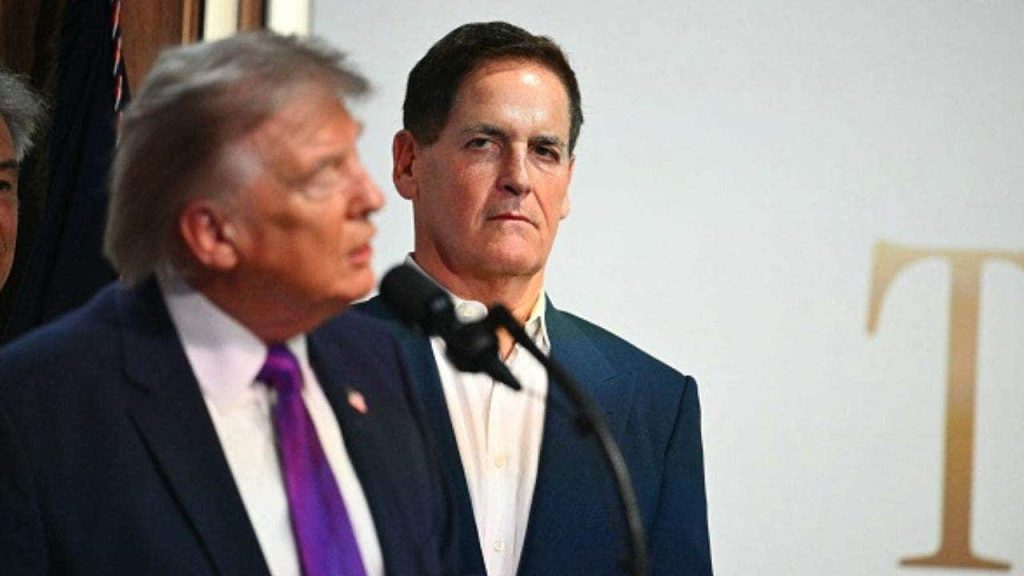
Mark Cuban stood with President Donald Trump at the White House on Monday as the administration unveiled TrumpRx.gov, a plan to cut prices on about 600 generic drugs by pairing government reach with private companies such as Amazon, GoodRx and Mark Cuban Cost Plus Drugs. The appearance was striking because Cuban spent months campaigning as a Kamala Harris surrogate and had been an outspoken critic of Trump, but he joined the president for a high-profile healthcare pitch that puts business muscle behind a policy goal. The optics mattered just as much as the policy: a billionaire who once blasted Trump now standing beside him to sell lower drug costs to Americans. This piece follows that moment, the history behind it and the questions it raises about politics, business and results.
At the podium inside the White House, Cuban and Trump presented the initiative as a practical step to make medicine cheaper. The program pairs the administration with major private-sector players, promising to blunt middlemen markups and offer generic medicines at lower prices. For voters tired of rising healthcare bills, the message was simple and direct: cut the cost of everyday drugs and reduce financial stress for families across the country.
The backstory makes the moment feel almost unreal. Cuban, known for Shark Tank and his minority stake in the Dallas Mavericks, campaigned for Kamala Harris and publicly criticized Trump’s policies throughout the campaign. Yet on Monday the businessman framed the initiative as beyond party lines, insisting the focus should be on outcomes, not political scorekeeping. He said, “Democrats want cheaper medications, too. When all is said and done, the goal is the goal. How do we make medications and healthcare cheaper? That’s all I care about.”
That shift did not happen in a vacuum. Cuban acknowledged recent regrets about a business decision tied to the Mavericks, telling listeners, “I regret who I sold to,” a reference to selling a majority stake to the Adelson family, led by Miriam Adelson, and the subsequent roster moves involving Luka Dončić. Those lines underscored a larger story about alliances, money and influence in pro sports and politics. The moment showed how financial choices and political alignment can collide in public view.
Trump did not miss a beat on the podium, turning the moment into a political poke and a point of persuasion. “Well, he made a mistake. It was a big mistake,” Trump said, drawing laughs from the crowd and easing the tension between the two men. The jab landed, but the real takeaway for the administration is that policy wins can sometimes bridge past animosities when practical benefits are on offer.
Cuban was peppered with questions from reporters about his past endorsements and whether he regretted supporting Harris during the campaign. He shut down politics on that front, saying, “I’m not going into my politics at all.” Instead he returned to the thrust of the deal, urging observers to ignore the partisan theater and watch for concrete savings on prescriptions.
Beyond the soundbites, the program itself is a bet on competition and transparency. By routing purchases and pricing through a mix of private partners, the White House argues it can undercut opaque supply chains and broker cheaper generics. Republicans will take that pitch seriously, because delivering measurable dollar savings is a winning argument with voters who want results over rhetoric.
Critics will call the spectacle a truce of convenience or a photo op. That criticism matters less if Americans start paying less for their medications. For a GOP-minded audience, the lesson is clear: when conservative leaders use market tools and private-sector partners to lower costs, it is worthy of notice and, if it works, support. Cuban may have changed his public posture, but the policy conversation is what matters now.
Politics will swirl around this partnership, and commentators on both sides will parse motives and optics. Still, the central question is simple: will TrumpRx.gov translate into lower costs at the pharmacy counter for everyday families? If it does, the president will claim a bipartisan win that speaks to voters’ pocketbooks more than to cable news narratives. Follow along on X: @alejandroaveela