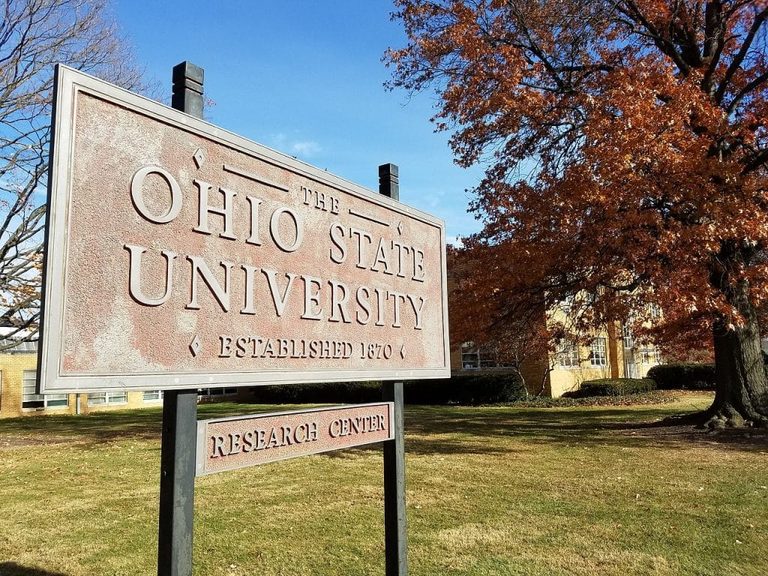
One year after Ohio’s Senate Bill 1—legislation that prohibits race‑based diversity programs at public colleges—students at Ohio State University are reflecting on how the law has altered their campus experience. Many describe a sense of loss, while others highlight grassroots efforts to fill the gaps left by the cuts.
Student voices on the changes
Brielle Shorter, a 2025 graduate and former organizer with the Ohio Students Association, said she heard rumors that the Center for Belonging and Social Change might be repurposed before the university announced the cuts in February 2025. “I was shocked, but not as mortified as others because I’d heard the chatter,” Shorter told Matter News. She added that Ohio colleges seemed to pre‑emptively halt DEI events even before SB1 officially passed in March 2025.
Hamza Mahmood, a third‑year communications technology major and public‑relations chair of the Pakistani American Students’ Association, expressed disappointment in the system, noting that “there’s nothing you can do because there are bigger people in power.”
Elise Britton, a fourth‑year political‑science major and president of the Minority Collegiate Outreach and Support Team, described the impact as “like someone taking a knife to my chest.” As a recipient of the Morrill Scholarship, she worries that the lack of clear explanations for the cutbacks leaves students “walking on eggshells.”
University response and student mobilization
Ohio State’s spokesperson reiterated the university’s commitment to a welcoming environment, citing resources such as Buckeye Commons and the Monda Resource Center, as well as the continued operation of the Morrill and Young Scholars Programs.
Following the announcement, the Black Caucus organized community‑building events and testimony‑writing sessions for SB1. The undergraduate student government issued a statement demanding transparency and offering resources to affected students. Arielle Barnes, a fourth‑year computer‑science and engineering student and former vice‑chair of the Black Caucus, urged peers to act, saying, “You don’t have the privilege to just sit aside.”
Concerns for incoming students
Several students voiced anxiety about how the elimination of DEI programs might affect future cohorts. Barnes wondered whether incoming students would still benefit from the organizations that helped her. Zaneb Zafar, a fourth‑year industrial‑systems and engineering major, said she found community among the Pakistani population at OSU and fears new students may struggle to find similar support.
Rebeca Vinseiro Figueira, who co‑founded the Public Affairs Multicultural Student Association, noted a sharp drop in membership after SB1 and described the need to adapt club methods while maintaining its mission.
Impact on scholarships and mental‑health resources
Students also highlighted changes to scholarship criteria. The Morrill Scholarship and Young Scholars Program have adjusted selection standards to comply with SB1, prompting worries about reduced graduation rates for Black, queer, and Latinx students.
Shorter pointed to the removal of the OSU Counseling and Consultation Service’s website for Black‑student resources. In response, the Black Mental Health Coalition created a discreet “Let’s Talk” line for Black‑focused therapy, though it is not widely advertised.
Student‑led adaptations
Despite the setbacks, student groups are finding creative ways to support one another. Mahmood emphasized that “the people decide what we are and what we don’t stand for.” Vinseiro Figueira mentioned the emergence of the Semillas Program, an informal initiative that grew after the Latine Student Success Center closed.
Zafar observed a rise in creativity, noting, “Brown people get creative when they’re limited.” Britton, now focusing more on mentorship, said the challenges have reinforced her commitment to guiding younger students.
As Ohio State navigates the ongoing effects of SB1, students continue to advocate for community, mentorship, and resources that align with their values and constitutional rights.
Original reporting: Matter News (Columbus) — read the source article.