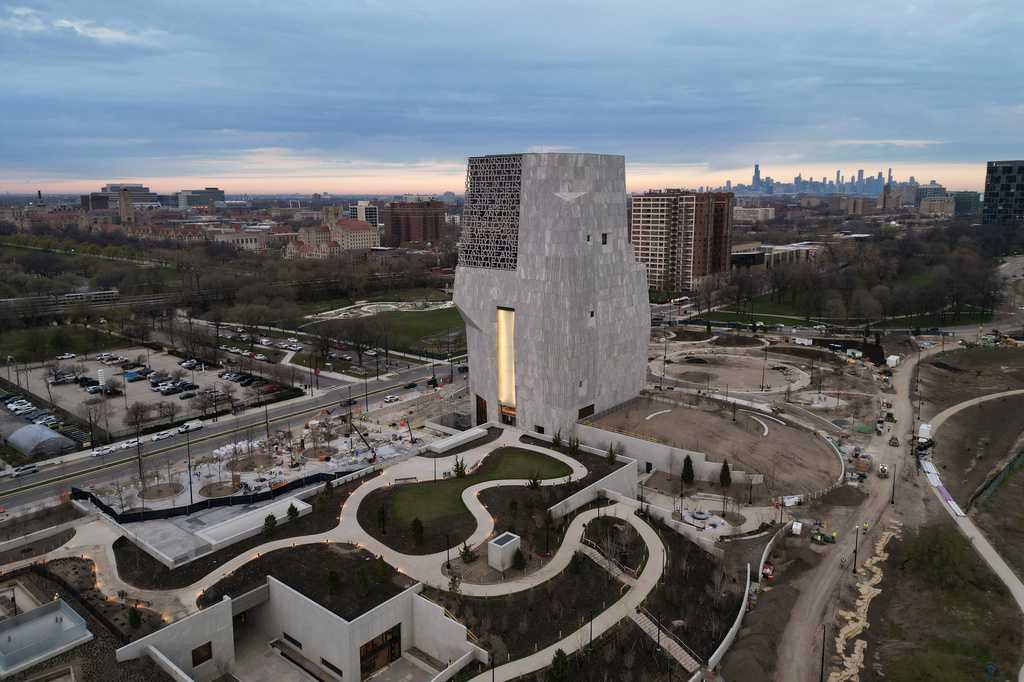
The Obama Presidential Center, located on Chicago’s South Side, is set to open to the public on Juneteenth. This new center offers a unique blend of political history and community-focused spaces, reflecting former President Barack Obama’s influence and legacy.
A Community-Centric Approach
The nearly 20-acre campus includes a digital museum, public library, basketball court, and picnic area, all designed to engage the community. The center aims to be a place where visitors can reflect on Obama’s presidency and consider how they can contribute to their own neighborhoods.
Josh Harris, the Obama Foundation’s vice president of public engagement, emphasized the center’s role as a gathering place for people from all walks of life. The museum’s digital exhibits cover key moments of Obama’s presidency, including the Affordable Care Act and immigration policies, while also offering personal reflections and interactive experiences.
Personal Touches and Historical Significance
The center’s location is significant, as it is near where Obama began his political career and where Michelle Obama grew up. The campus includes a professional-grade basketball court and a garden designed by the former first lady. Public spaces like the John Lewis Plaza and a new Chicago Public Library branch further highlight the center’s commitment to community engagement.
The museum also features a life-sized replica of the Oval Office and displays of Michelle Obama’s iconic ballgowns. Visitors can engage with these exhibits and explore the personal and political aspects of the Obamas’ lives.
Accessibility and Admission
While the museum charges $30 for admission, making it the most expensive presidential museum in the U.S., the Obama Foundation offers free days and discounts for Illinois residents. Many parts of the campus, including the playground, library, and grilling area, are free to the public, ensuring accessibility for all visitors.
The Obama Presidential Center is expected to draw up to 1 million visitors annually, providing a space for reflection, learning, and community building.
Original reporting: WLKY Louisville — read the source article.