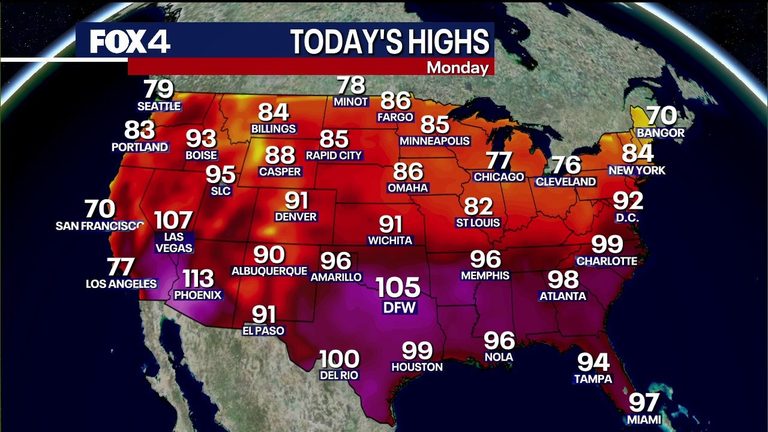
North Texas residents should prepare for another stretch of extreme heat as a dominant high‑pressure ridge settles over the region. Forecasts from the FOX 4 Weather Team show daily highs ranging from 102°F to 105°F through Wednesday, with temperatures climbing even higher on Tuesday and Wednesday. The heat is well above the seasonal average high of 96°F.
Current conditions and short‑term outlook
After reaching 104°F on Sunday, the area is expected to see only modest variation in temperature. Monday afternoon will likely see highs between 102°F and 105°F. A weak frontal boundary stalled north of the Red River will keep most of the region dry, limiting rain chances to about 10% for counties along the river late Monday. Better chances for precipitation remain confined to Oklahoma and the Arklatex region farther east.
Mid‑week and weekend forecast
A second cold front is projected to move through the area on Friday, but forecasters anticipate only a slight dip in temperature, with highs still near 101°F. Minimal rainfall is expected, and the high‑pressure system is expected to rebuild over the weekend, maintaining the oppressive heat.
Fire danger and humidity
Despite relatively low dew points in the 50s, the combination of dry air and light south‑southwesterly winds of 10‑12 mph will elevate fire danger across North Texas throughout the day. Residents are urged to exercise caution with open flames, outdoor grilling, and any activities that could spark a wildfire.
What residents can do
Health officials recommend staying hydrated, limiting outdoor activity during peak heat hours, and checking on vulnerable neighbors, especially the elderly and young children. Vehicles should be shaded when possible, and air‑conditioned spaces should be used to prevent heat‑related illnesses.
The forecast underscores that significant rainfall remains unlikely for the rest of the week, and the region will continue to navigate a late‑summer heat wave that shows little sign of abating soon.
Original reporting: Dallas – Ft. Worth Feed (HLL/CB) — read the source article.