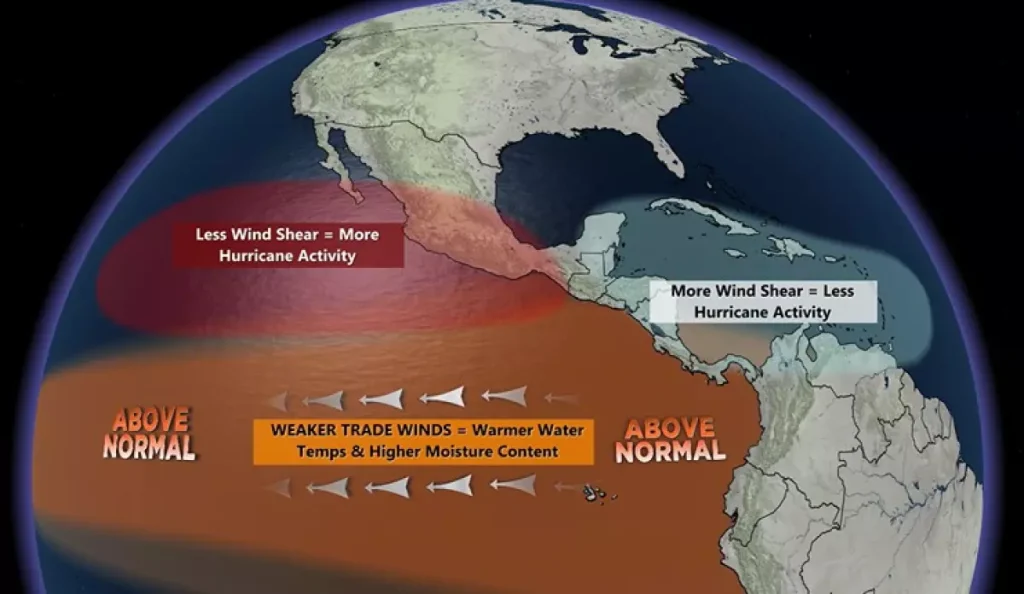
The National Oceanic and Atmospheric Administration (NOAA) has released its 2026 hurricane season outlook, predicting a below-normal level of tropical activity in the Atlantic. This forecast is largely attributed to the atmospheric conditions associated with a developing El Niño, which are expected to suppress cyclone formation.
Forecast Details
According to NOAA, there is a 55% chance of a below-normal hurricane season, with only a 10% likelihood of above-normal activity. Forecasters anticipate the formation of eight to 14 named storms, with three to six potentially becoming hurricanes. Among these, one to three could reach major hurricane status, characterized by sustained winds of at least 115 mph.
In comparison, an average hurricane season typically sees 12 named storms, seven hurricanes, and three major hurricanes. The outlook from Colorado State University aligns closely with NOAA’s, predicting 13 named storms, six hurricanes, and two major hurricanes for the 2026 season.
El Niño’s Role
El Niño is expected to play a significant role in reducing hurricane activity during the peak months from August through October. It often increases upper-level winds in the Atlantic’s Main Development Region, which stretches from the Caribbean through the tropical Atlantic and is a key area for hurricane formation.
Despite the forecast for a quieter season, officials emphasize that these outlooks do not predict landfall events. Even during El Niño years, impactful storms can occur. For instance, the 2004 hurricane season, which also featured El Niño conditions, resulted in 15 named storms, with five affecting Florida.
Preparedness Remains Key
As the Atlantic hurricane season officially runs from June 1 through November 30, with 97% of tropical activity occurring within these months, residents are reminded to remain vigilant and prepared. The first storm of the 2026 season will be named Arthur, though no formations are expected in the immediate weeks.
Original reporting: Jacksonville Today — read the source article.