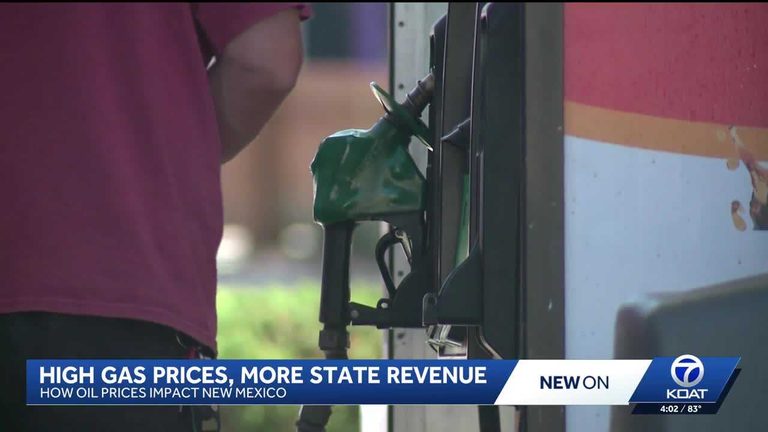
Albuquerque motorists are confronting the highest September gas prices in state history, yet the surge in oil production is delivering a windfall for New Mexico’s budget. Charles Sallee, director of the New Mexico Legislative Finance Committee, explained that the state’s tax structure on extracted oil and royalty payments is translating higher market prices into increased funding for public services.
Oil taxes fund education, health and tax relief
“New Mexico taxes oil that’s taken out of the ground,” Sallee said. “In some cases, if the state owns the ground, it also receives royalty payments.” With Middle‑East tensions pushing crude prices upward, the state’s share of those revenues has risen sharply.
According to Sallee, the state’s production jumped from roughly 70 million barrels a year before 2017 to an expected 850 million barrels annually after the recent boom. That expansion has allowed New Mexico to allocate a portion of oil and gas proceeds to permanent funds, which are then used each year to support early‑childhood programs, public schools and Medicaid.
“The revenue allows the state to provide a greater level of service than would otherwise be provided, essentially delivering huge tax relief,” Sallee noted. He added that the average resident benefits from this money by seeing lower tax burdens while still receiving robust funding for essential services.
Drivers feel the pinch
Local drivers are adjusting their habits to cope with the higher cost at the pump. “I feel like I can’t even really drive anywhere anymore,” said Dean, an Albuquerque commuter. “Everything is limited to where I go nowadays because gas prices are so high.” Stephen, another driver, echoed the sentiment, noting that families are forced to choose between fuel and food.
AAA New Mexico recommends shoppers compare prices using apps such as GasBuddy or the AAA Mobile app. “Shop around for gas, that’s one of the best things you can do,” said Daniel Armbruster of AAA. He also suggested simple fuel‑saving practices: turn off air conditioning when possible, avoid rapid acceleration, remove excess weight from the vehicle and keep tires properly inflated.
Future outlook
Geopolitical factors continue to influence prices. Armbruster pointed to the conflict in Iran and the blockage of the Strait of Hormuz as drivers of current market volatility, but noted a recent dip in crude prices of about 4 percent, offering a glimmer of hope.
Seasonal changes may also bring relief. When stations switch to a winter fuel blend in the fall, prices can drop roughly 20 cents per gallon, according to AAA.
Balancing revenue and spending
Sallee warned that while the oil revenue surge is a boon, it requires careful management. “If we spend too much now, we could have less money later,” he said. “If we spend too little, we leave money on the table that could improve services for New Mexicans.” The state is therefore monitoring the funds to avoid a future dip or plateau in revenue.
In summary, New Mexico’s oil boom is delivering significant tax income that supports schools, health programs and tax relief, even as drivers grapple with record‑high gasoline costs. By comparing prices, practicing fuel‑efficient driving, and awaiting seasonal price adjustments, motorists can mitigate some of the immediate impact while the state continues to leverage its natural‑resource wealth for public benefit.
Original reporting: KOAT Albuquerque — read the source article.