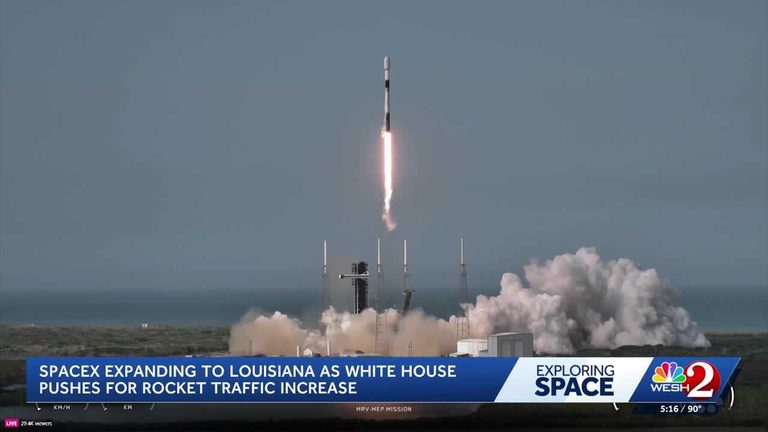
The Trump administration has unveiled a sweeping national space transportation policy that targets a dramatic increase in U.S. launch activity. By 2030, the policy calls for space transportation ranges capable of supporting over 1,000 launches and re‑entries annually – roughly four times the current volume.
Key components of the policy
To reach this ambitious goal, the plan calls for three major actions:
- Infrastructure expansion: Existing launch sites will be upgraded and new pads added, allowing more companies to conduct missions from locations such as Cape Canaveral.
- Accelerated permitting: The permitting process and environmental reviews will be streamlined to reduce delays while still protecting the environment.
- Enhanced cooperation with commercial firms: The government will work closely with private industry to align resources and timelines.
Industry leaders have welcomed the move. Ken Kremer, a research chemist and founder of Space UpClose, noted that established players like United Launch Alliance (ULA) and newer entrants such as Relativity Space, Firefly, and Stoke Space are already building pads at the Cape. He added that Blue Origin could also increase its launch cadence once its launch pad and rocket are ready.
SpaceX’s $100 billion investment
In parallel with the policy, SpaceX announced a $100 billion investment in its Starbase facility in Louisiana. The expansion is designed to support “thousands of Starship flights a year,” featuring ten launch pads with the first new launch slated for 2029. This massive commitment underscores how quickly the commercial space sector is growing.
While the numbers are bold, experts caution that reaching 1,000 launches by 2030 will be challenging. Kremer said, “I think that’s going to be really tough. I’m not saying it’s impossible, but it’s going to be really tough.” He believes the target may be more realistic a few years beyond 2030, provided the industry respects environmental safeguards and maintains public support.
Balancing growth and stewardship
The policy emphasizes that rapid expansion must not come at the expense of environmental protection. Kremer stressed the importance of “respecting the environment and getting the public on their side.” The administration’s approach aims to balance economic opportunity with responsible stewardship of the nation’s airspace and natural resources.
Overall, the new space transportation policy reflects the Trump administration’s commitment to maintaining U.S. leadership in space, fostering private‑sector innovation, and creating jobs across the nation. If successful, the United States could see an unprecedented era of space activity, positioning American industry and research at the forefront of the final frontier.
Original reporting: WESH Orlando — read the source article.