There is a moment, standing in the entry hall of the Museum of the National Center of Afro-American Artists in Roxbury’s Eliot Square, when you realize you have stumbled into something genuinely rare — a place that has been quietly doing the most important cultural work in Boston for more than half a century without ever demanding the spotlight. That restraint, somehow, makes it more compelling, not less.
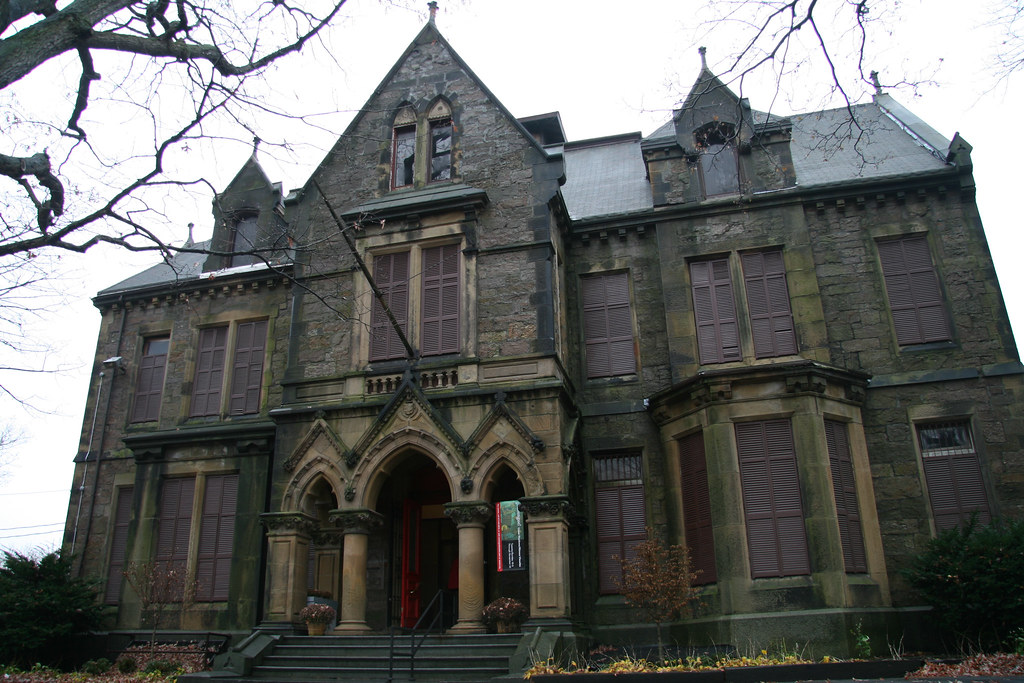
Founded in 1968 by the visionary Edmund Barry Gaither alongside the late Elma Lewis, the NCAAA occupies a turreted Victorian mansion on Walnut Avenue that looks like it was pulled from a nineteenth-century novel and then filled, wall to wall, with brilliance. The neighborhood is Roxbury — specifically the area around the Eliot Square Historic District — and if you have never made the trip out here from the tourist-dense stretches of Boylston Street or the Fenway, I am here to tell you that you have been leaving one of Boston’s great institutions on the table.
The permanent collection spans African, African-American, and Caribbean art across painting, sculpture, prints, and works on paper. What distinguishes it from a generic survey is the insistence on context. Edmund Barry Gaither, who has served as the museum’s director and curator for decades, has built an institution that treats Afro-American visual culture as a living, evolving conversation rather than a historical artifact. You do not walk through these galleries feeling like you are studying the past. You feel like you are being introduced to a set of ideas that are very much alive and unfinished.
On a recent Saturday visit, a small temporary exhibition of works on paper occupied one of the upper rooms, and I found myself lingering far longer than I had planned. The scale of the building — intimate rather than monumental — means you can actually have a moment with a piece of art, something that gets harder to do in Boston’s larger institutions on a busy weekend afternoon.
The museum is also home to a series of public programs, lectures, and community events that draw serious audiences. Check the calendar before you go; there is often something scheduled that adds a layer to whatever is on the walls.
Admission is affordable, parking is available nearby, and the museum is a short ride from the Ruggles MBTA stop on the Orange Line. Plan to give yourself a couple of unhurried hours. Bring a friend who thinks they know Boston’s art scene well — the conversation on the walk back to the train will be a good one.
Boston loves to congratulate itself on being a city of culture and ideas. The NCAAA is proof that the city’s most meaningful cultural institutions are sometimes the ones still waiting to be properly discovered by the people who live here.