On Monday, Nevada filed a lawsuit in federal district court challenging the Department of the Interior’s new operating guidelines that would slash Colorado River deliveries to the lower‑basin states by about 20% over the next two years. The suit was filed by the state, the Colorado River Commission of Nevada, and the Southern Nevada Water Authority.
State officials say the plan is one‑sided
Governor Joe Lombardo, a Republican, warned that the cuts could force Southern Nevada to lose more than 70% of its already limited Colorado River allocation. He said the Upper Basin states – Colorado, Utah, New Mexico and Wyoming – are not required to contribute any water, leaving the lower‑basin states to shoulder the bulk of the shortage.
“The Department of the Interior can’t roll Nevada’s water needs into a solution that rests on the backs of the lower‑basin states,” Lombardo said in a statement. “The solution needs to involve everybody. Until that happens, we are prepared to fight for as long as it takes.”
Why the cuts matter for Nevada
Southern Nevada Water Authority General Manager John Entsminger, who leads Nevada’s Colorado River negotiations, called the plan “fundamentally flawed.” He warned that the reduced deliveries would jeopardize essential services, from drinking water to irrigation for the region’s farms.
“You’re just not going to be able to provide the level of water service necessary to maintain those essential services that the community requires,” Entsminger told CNN.
Legal backdrop and possible ripple effects
The operating guidelines were released by the Interior Department after years of stalled negotiations among the seven Colorado River states. While the lower‑basin states – Nevada, Arizona, and California – face mandatory cuts, the four Upper Basin states are not subject to federal enforcement, a point that many legal scholars say will fuel litigation.
Law professor Jason Robison of the University of Wyoming noted that Nevada’s lawsuit is “certainly not a bolt from the blue,” and that other lower‑basin states and Tribal Nations may also consider legal action.
Arizona’s Department of Water Resources said it is evaluating Nevada’s complaint and will determine an appropriate response. So far, Arizona has not filed its own suit, despite predictions that it might be the first to do so.
Potential outcomes
Water‑law experts say the case could take years to resolve and may be costly for the state. Some, like Arizona State University professor Rhett Larson, believe the court is unlikely to halt the cuts, given the difficulty of finding an alternative water‑management plan.
Nevertheless, the litigation could force all seven states and the federal government back to the negotiating table. Entsminger said the goal is a consensus where “everyone sacrifices a little bit, so that no one state has to suffer catastrophic reductions.”
Broader context
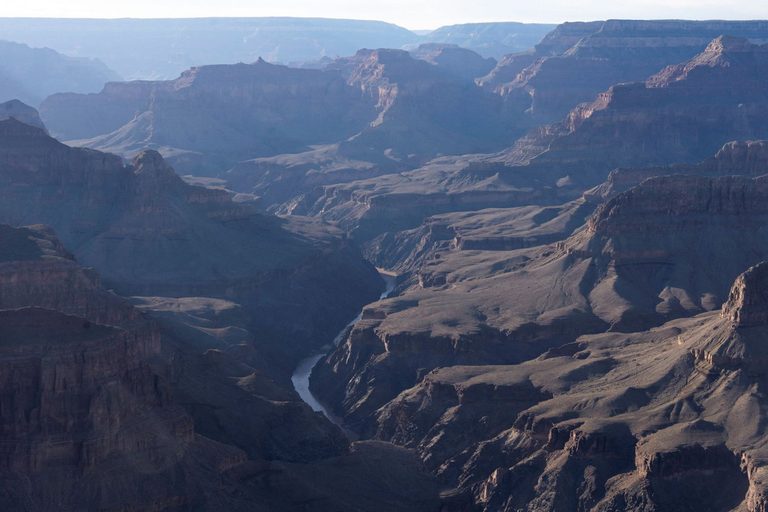
The Colorado River, which supplies water to roughly 40 million people and irrigates more than five million acres of farmland, has seen its reservoirs – Lake Mead and Lake Powell – tumble to record lows amid decades of climate‑driven drought and heavy use. The river’s future remains uncertain, and the legal battle in Nevada underscores the growing tension over water rights in the western United States.
Original reporting: KTVZ (Central Oregon) — read the source article.