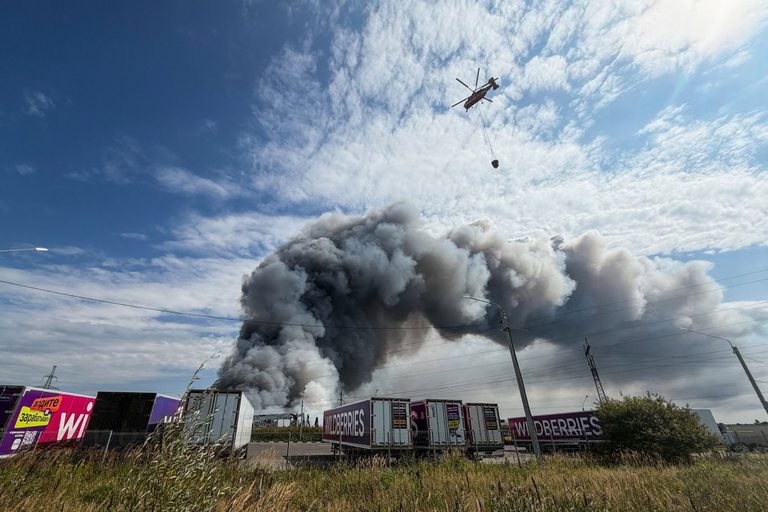
President Vladimir Putin signed a decree on Monday that gives the Russian government the power to temporarily take over “critical infrastructure” when private owners do not adequately protect those assets from the growing wave of Ukrainian attacks. The measure was presented as a response to recent drone strikes that have disrupted fuel supplies, energy networks and logistics hubs across the country.
What the decree covers
The decree lists several sectors as “critical,” including fuel and energy facilities, communications networks, transport and logistics centers, and other essential services. If an owner does not take sufficient steps to secure a facility or restore its operation promptly after an attack, the state may impose “temporary administration,” effectively transferring ownership rights, property shares and operational control to the government.
Government response
Kremlin spokesperson Dmitry Peskov said that many enterprise owners have neglected proper anti‑drone security measures, forcing the state to act. He also cited Western support for Kyiv as a factor that compels Moscow to safeguard its own security. When asked which companies might be affected, Peskov indicated that the decision will be made by relevant government agencies after a case‑by‑case analysis.
Escalating attacks
Ukrainian forces have intensified strikes deep inside Russian territory, targeting logistics hubs such as Ozon’s distribution centers—a competitor to the frequently hit e‑commerce giant Wildberries. The attacks have caused fuel shortages and brought the war’s impact closer to ordinary Russian citizens.
At the same time, Russia has stepped up its own missile campaign against Ukraine, launching two missiles and 150 drones in a recent overnight operation. Ukrainian air defenses reported shooting down 124 of those drones. Kyiv’s shortage of U.S.-made Patriot air‑defense interceptors, worsened by a global supply crunch linked to the Iran conflict, remains a key vulnerability.
Ukrainian perspective
Ukrainian President Volodymyr Zelensky told reporters that Kyiv had received a “small number of Patriot missiles” from an undisclosed source, emphasizing the need for more. He said the limited deliveries are insufficient to fully counter the Russian missile barrage.
Implications
The decree marks a significant shift in how the Russian state may intervene in the private sector during wartime. By granting itself the authority to assume control of essential facilities, the Kremlin signals a willingness to centralize management of the economy in response to security threats. Analysts note that the move could affect foreign investors and domestic businesses that rely on private ownership of infrastructure.
For Russian citizens, the decree may lead to more direct government involvement in everyday services such as fuel distribution and communications. Whether the temporary administration will improve security and restore services quickly remains to be seen, but the Kremlin argues that swift state action is necessary to protect the nation’s critical functions.
Original reporting: KTVZ (Central Oregon) — read the source article.