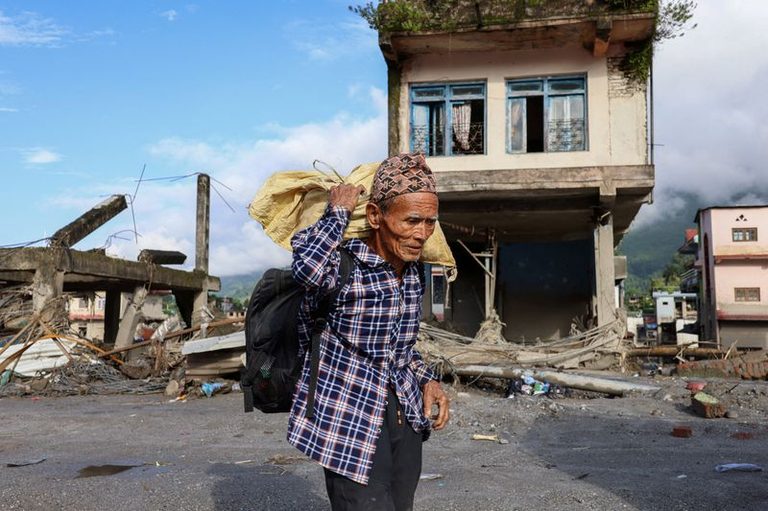
In the wake of a catastrophic glacier collapse in late August, Nepal’s disaster management chief Dharam Raj Uprety announced a $5 billion funding request to rebuild the nation’s devastated valleys. The appeal, slated for this week, will be directed at the World Bank, the Asian Development Bank and the embassies of major donor countries, including the United States, Britain, India, China, Japan and the European Union.
Climate‑justice framing
Uprety emphasized that the disaster is not merely a flood but a climate‑change event that disproportionately harms nations that have contributed little to global emissions. Geologist Prakash Pokhrel of the National Disaster Risk Reduction and Management Authority echoed the sentiment, stating that “countries like Nepal don’t contribute significantly to climate change, but they are facing this level of disaster. So why should it not be a shared responsibility among the global community?”
Scale of the devastation
The glacier collapse sent torrents through valleys in Nepal and China’s Tibet region, killing at least 1,300 people and leaving more than 5,300 missing. Over 12 hydropower plants, critical trade routes, roads, bridges, homes and other infrastructure were swept away, leaving the nation with a massive reconstruction challenge.
Funding outlook
Nepal’s $5 billion estimate covers the first five months of recovery, focusing on temporary shelters, schools and essential infrastructure. While the request is being prepared, officials note that similar disaster‑relief funding in the region has often arrived slowly. Pakistan’s post‑2022 flood experience showed that only a fraction of pledged aid was quickly disbursed, with a sizable portion diverted to oil imports rather than direct reconstruction.
International response expected
The upcoming donor outreach will precede Prime Minister Balendra Shah’s address to the United Nations on September 24, where he is expected to call for greater support for climate‑vulnerable developing nations. Nepal has repeatedly highlighted its negligible contribution to historic greenhouse‑gas emissions in United Nations submissions, underscoring the moral case for a shared global response.
Original reporting: Appleton, WI News Feed (HLL/CB) — read the source article.