In the 2026 Senate contests that could decide control of the chamber, candidates are increasingly dependent on money from outside their own states. OpenSecrets analyzed 17 candidates across nine key battlegrounds and found that roughly two‑thirds of the $289 million in individual contributions reported through mid‑July originated from out‑of‑state donors.
Local voters see fewer home‑state contributions
Fourteen of the 17 candidates studied received the majority of their individual contributions from beyond their borders. The trend reflects a decades‑long retreat from locally sourced campaign money, a shift driven by limited donor pools in smaller states, the rise of online fundraising platforms such as WinRed and ActBlue, and a national donor class focused on controlling congressional majorities.
Party dynamics and donor behavior
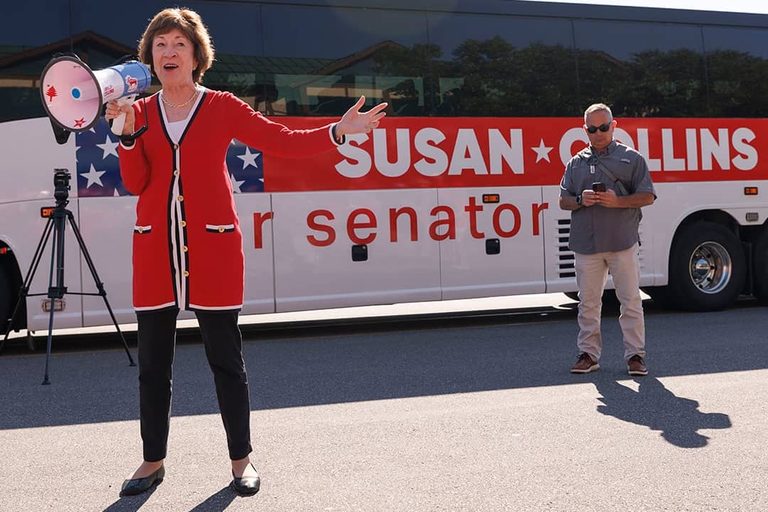
While Democratic candidates tend to lean more heavily on national donor networks, Republican candidates balance local roots with support from the party’s national infrastructure and deep‑pocketed outside groups. The data show that eight of the nine Democratic contenders relied more on out‑of‑state money, with seven of eight raising a larger share from outside their states. In contrast, three Republicans—Sen. Susan Collins (R‑Maine), Sen. Dan Sullivan (R‑Alaska) and Rep. John Sununu (R‑NH)—raised more than 85 % of their individual contributions from outside their home states, largely because they represent some of the nation’s smallest populations.
Why smaller states feel the pressure
Professors Kenneth Miller (UNLV) and Costas Panagopoulos (Northeastern) explain that candidates in states with limited populations simply have fewer local donors to tap. When a campaign needs $60‑$80 million, as in Maine, the pool of in‑state contributors can be exhausted quickly, forcing candidates to look elsewhere.
National donors target winnable races
Donors are drawn to contests they believe are winnable, especially when a handful of states will determine Senate control. In Alaska and New Hampshire, more than 80 % of individual contributions came from outside the state, while in Iowa and Michigan, over half of the contributions were out‑of‑state. This pattern underscores how national money is funneled into races that could tip the balance of power.
Super‑PACs amplify the trend
Super‑PACs also play a role. As of June 30, the GOP‑aligned Senate Leadership Fund held nearly $239 million in cash, almost double the $126.5 million held by the Democrats’ Senate Majority PAC. Because super‑PACs are not subject to the same contribution limits as individual donors, they can further increase the reliance on national money.
Implications for representation
Experts warn that heavy out‑of‑state financing may influence how senators prioritize national donor expectations over local constituent needs. “When a senator’s primary responsibility is to their state, but the bulk of their funding comes from elsewhere, there is a steep price to pay for ignoring the electorate,” said Panagopoulos.
The trend is likely to intensify as the 2026 midterms approach, with candidates navigating the delicate balance between national donor support and the expectations of the voters who ultimately fill the ballot boxes.
Original reporting: KRDO (Colorado Springs metro) — read the source article.