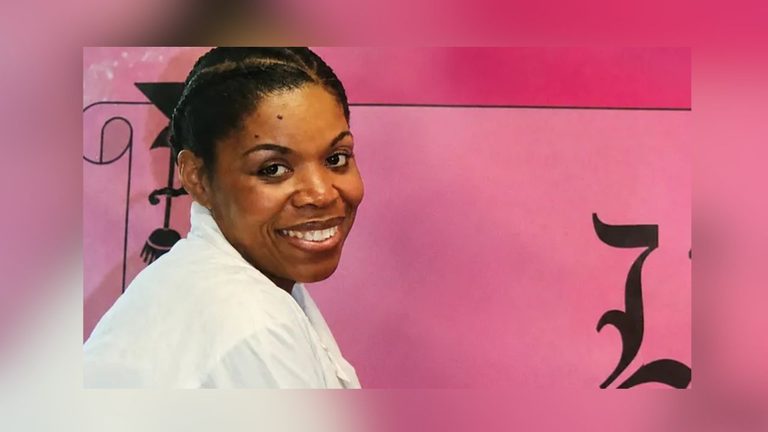
Tameshia Shelton, a 48-year-old Mississippi woman, has been released on bond after the state’s highest court allowed a ruling to stand that found prosecutors failed to prove her guilt beyond a reasonable doubt. Shelton was convicted in 2015 in the 2009 shooting death of Danelle Young, the 21-year-old boyfriend of her youngest sister.
Background of the Case
Shelton was released on a $50,000 bond with assistance from the Mississippi Fund Collective. Her family greeted her outside the Clay County Detention Center on Monday with hugs, party blowers, and a teddy bear on her 48th birthday. The Mississippi Court of Appeals ruled prosecutors failed to prove Shelton’s guilt and found she received ineffective legal representation during her trial.
The court concluded Shelton’s attorney, Rod Ray, failed to present an apparent suicide note allegedly written by Young, despite its potential significance to the defense. The note reportedly thanked Shelton for her kindness, expressed his love for her sister, and stated, ‘I have no life without her. These are my last words.’ The appeals court also determined the trial court wrongly denied Shelton relief after the state’s forensic pathologist reversed his original opinion that Young’s death was a homicide.
New Trial and Possible Exoneration
On June 6, the Mississippi Supreme Court voted 6-1 to leave the appeals court ruling intact, clearing the way for Shelton’s release and a new trial. If the indictment is ultimately dismissed, Shelton would become the seventh person prosecuted in Mississippi’s 16th Judicial District to be exonerated of murder, the highest total for any district in the state.
Shelton’s daughter Trinity has started a GoFundMe account for her mother. She states in the post that during her 11 years in prison, her mother lost her home that had been fully paid off, lost her independence, lost precious time with her family, and developed a severe, debilitating illness, for which she did not receive proper medical attention. Funds raised will be used to provide Tameshia Shelton with housing, medical care, and ‘mental health counseling to help her deal with this institutional trauma.’
Original reporting: The Dallas Express — read the source article.