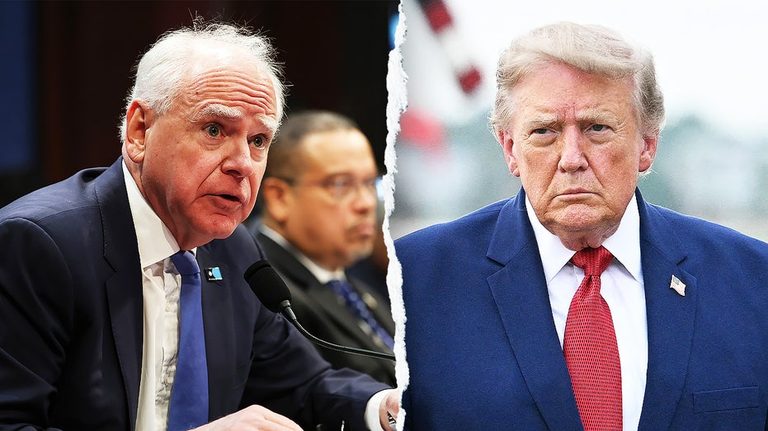
Governor Tim Walz of Minnesota signed an executive order Tuesday that stops the issuance of mining permits and leases for copper and nickel projects near the Boundary Waters Canoe Area Wilderness. The order applies to land in the state’s northeast that borders the federally protected wilderness area, a region known for its pristine waterways and abundant natural resources.
State action versus federal legislation
Walz’s decision comes just weeks after President Donald Trump signed legislation that reversed a Biden‑era rule blocking new mining leases near the Boundary Waters for 20 years. The federal bill, championed by Rep. Pete Stauber, R‑Minn., was intended to open the Duluth Complex – the largest known untapped source of nickel and copper in North America – to commercial development.
Walz argued that the state’s order is necessary to protect the headwaters of the Boundary Waters and to ensure that any future mining adheres to Minnesota’s stringent environmental standards. He called on the state legislature to enact permanent protections for the area.
Republican response
House Majority Whip Tom Emmer, R‑Minn., the highest‑ranking Minnesotan in Congress, condemned the governor’s move as “stupid” and “dangerous.” Emmer warned that the ban could harm union jobs in northern Minnesota and increase the nation’s reliance on foreign sources of critical minerals, particularly from China. He said the decision puts national defense at risk by limiting domestic production of metals essential for military equipment and electric‑vehicle batteries.
Emmer also dismissed the environmental groups supporting Walz’s order, stating that “every one of us is an environmentalist” and that the real issue is whether the United States can compete with China’s mining industry.
Environmental and community perspectives
Environmental organizations, including Save the Boundary Waters, praised the governor’s action. Executive director Ingrid Lyons said the federal government had previously “sold out our canoe country” by weakening protections, and that Walz’s order helps keep toxic copper mining out of the watershed.
Local residents and outdoor enthusiasts have long voiced concerns that mining could threaten water quality, fish habitats, and the recreational value of the Boundary Waters, which draws tourists from across the country.
Economic and strategic implications
The Duluth Complex holds an estimated 1.5 billion tons of copper‑nickel ore, a resource that could support jobs in mining, processing, and related industries. Proponents argue that developing the deposit would create high‑paying jobs, increase tax revenue, and reduce dependence on imports from adversarial nations.
Opponents counter that the environmental risks outweigh the economic benefits and that Minnesota’s existing environmental regulations can ensure any mining is conducted safely. They also point to the potential for long‑term damage to a world‑renowned wilderness area that supports tourism and recreation.
Next steps
The governor’s order is an executive action and could be challenged in court by mining interests or the federal government. Meanwhile, the Minnesota legislature is expected to consider additional measures to either reinforce or overturn the governor’s decision.
Fox News Digital reached out to Governor Walz’s office for comment but did not receive a response at the time of publication.
Original reporting: Fox News (HLL/CB) — read the source article.