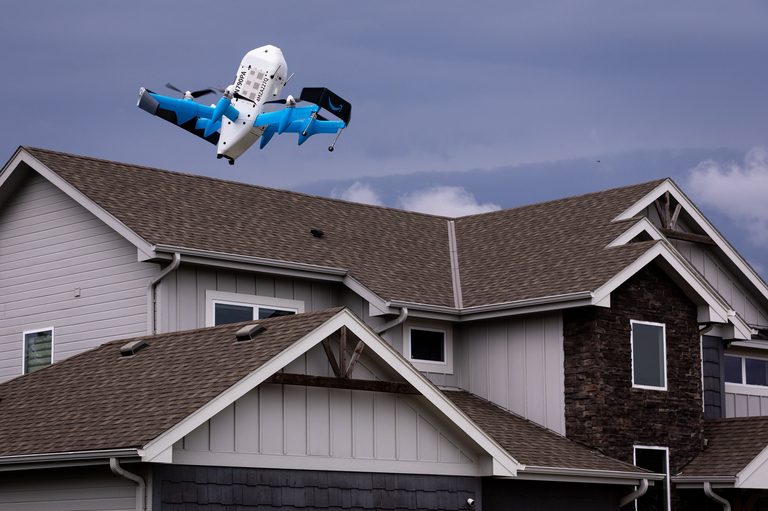
Amazon disclosed Wednesday that its Prime Air drone program will grow from a handful of test sites to service nearly 500 U.S. cities by the end of 2026. The expansion focuses on suburban neighborhoods where drones can operate away from skyscrapers and major airports.
How the service works
Customers who are Amazon Prime members and order goods worth more than $50 will receive drone delivery at no extra charge; smaller orders will cost $2.99. Non‑members will pay a flat $4.99 fee. Amazon says drones can carry packages up to five pounds and may deliver within as little as 30 minutes.
Geographic reach
The rollout will include new sites in metro areas such as Chicago, Atlanta, Cleveland and Boise, with each drone hub serving multiple surrounding cities. Amazon has not disclosed the exact number of new launch locations, but the company expects the network to reach 30 million customers by year‑end.
Competition with Walmart
The move intensifies the ongoing competition between Amazon and Walmart to offer the fastest delivery options. Walmart, which partners with Wing, a division of Alphabet, plans to add 150 more stores to its drone network, aiming for 270 drone locations by 2027. While both retailers use a mix of drones and traditional drivers, drones are being positioned as a supplemental tool rather than a replacement for trucks.
Operational challenges
Amazon’s drones face practical hurdles such as tree cover, landscaping, inflatable pools and the need for clear drop zones. Noise concerns and local regulatory approvals also vary by community. The Federal Aviation Administration has granted Amazon waivers to fly beyond the pilot’s line of sight, but broader federal rules allowing beyond‑horizon flights are still pending.
Economic considerations
Analysts note that drones currently handle only a fraction of Amazon’s hundreds of millions of annual deliveries. The economics remain uncertain, as each flight requires a team of licensed pilots and support staff, potentially earning more than traditional truck drivers. Amazon’s CEO Andy Jassy highlighted that the company has learned from operations in 11 sites across Arizona, Florida, Kansas, Louisiana, Michigan, Nebraska and Texas.
Potential benefits
Retail analyst Sucharita Kodali of Forrester suggested that drones could be especially useful for urgent, lightweight items such as prescription medications. However, she cautioned that many of the announced cities may be small towns clustered together, and that a launch does not guarantee significant sales.
Future outlook
Amazon aims to deliver half a billion packages via drones by the end of the decade, with a target of 30‑minute delivery windows. The company continues to invest in smaller fulfillment centers, warehouse automation and its truck fleet to complement the aerial network.
Original reporting: Dallas TX News (HLL/CB) — read the source article.