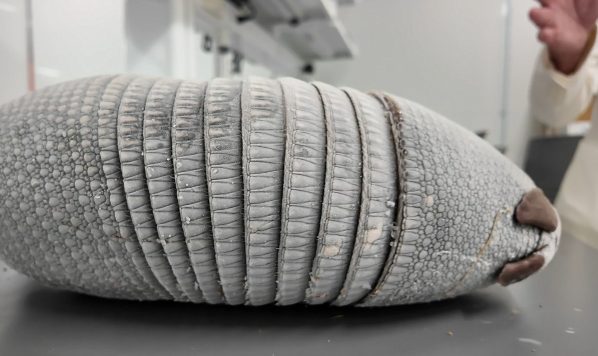
Oxford, Ohio – In a discovery that could become a historic milestone for the state, scientists at Miami University have documented the first naturally occurring armadillo in Ohio. The specimen, a gray Mexican long‑nosed armadillo, was found as roadkill outside its typical range and is now being preserved for further study.
University researchers confirm the find
Dr. Tereza Jezkova, associate professor of biology at Miami University, announced that the armadillo appears to have arrived in Ohio without any human assistance. “It is possibly the first documented occurrence of natural occurrence of armadillos in Ohio,” she said. While she expressed pleasant surprise at the find, she emphasized that the animal’s presence is not yet understood.
Tracking a northward migration
Graduate students at Miami University have been monitoring the Mexican long‑nosed armadillo as it moves northward, extending beyond areas where its physiology would normally allow it to survive. “Right now, we don’t know how they do it, what the mechanisms are,” Dr. Jezkova explained. The researchers hope the specimen will provide clues about the species’ migration patterns and its ability to adapt to new environments.
No immediate threat to local wildlife
When asked whether the armadillo could negatively impact other species in the region, Dr. Jezkova responded, “No, so far, we don’t believe so.” The university plans to display the preserved specimen at the Hefner Museum of Natural History on campus, offering the public a chance to see the unusual visitor.
Health considerations
Some armadillos are known to carry bacteria related to leprosy, but researchers have not found evidence of this in armadillos discovered in northern areas. The team will continue testing to ensure there are no public‑health concerns associated with the find.
Why the discovery matters
This unexpected arrival provides a unique opportunity for scientists to study how climate change, habitat shifts, and other ecological factors may be influencing the range of wildlife species. Understanding these dynamics can help Ohio’s natural resource managers anticipate future changes in the state’s biodiversity.
Looking ahead
Dr. Jezkova and her students plan to continue tracking armadillo movements and to collaborate with wildlife agencies across the Midwest. Their work underscores the importance of local research institutions in documenting and responding to emerging environmental trends.
Original reporting: WLWT Cincinnati — read the source article.