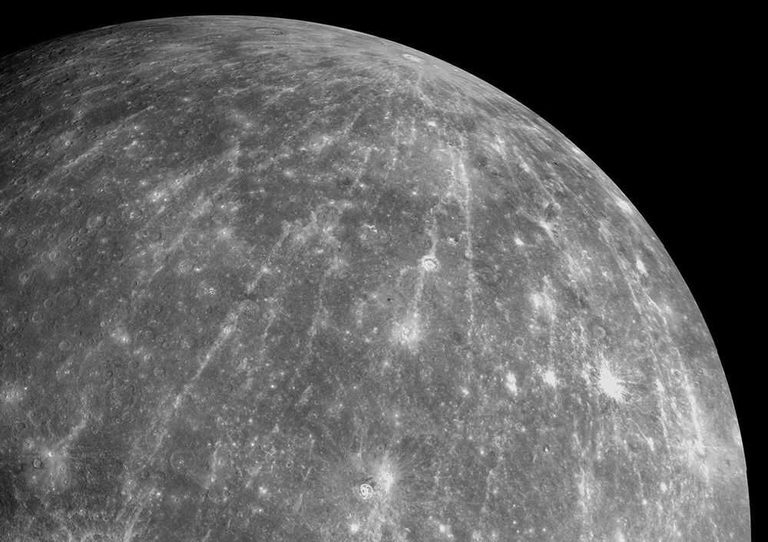
Scientists analyzing data from NASA’s MESSENGER mission have uncovered evidence that Mercury – the smallest planet in our solar system – may have shrunk far more than earlier studies indicated. The new research, published in Geophysical Research Letters, estimates the planet’s radius could be 10% to 30% smaller than previously believed, a reduction of roughly 7.2 miles (11.6 kilometers).
Why Mercury is shrinking
Mercury formed about 4.5 billion years ago from swirling gas and dust. Over time, the planet’s interior has cooled, causing it to contract. As the core cools, the crust buckles, creating the long, steep cliffs and ridges that pepper the planet’s surface. These “wrinkles” are the visible record of the planet’s gradual compression.
New analysis reveals hidden contraction
Lead author Gaku Nishiyama of the German Aerospace Center’s Institute of Space Research explains that debris from billions of years of asteroid and comet impacts has obscured many of the surface’s contraction features. By creating a global map of surface roughness from MESSENGER’s high‑resolution data, the team identified a pattern: the roughest regions showed fewer visible wrinkles, suggesting that impact debris is masking the true extent of the planet’s shrinkage.
The researchers estimate that Mercury may have lost between 0.6 and 4.3 miles in radius in earlier studies, but their new calculations push that figure up to a possible 7.2‑mile reduction. If accurate, this would mean a larger metallic core relative to the planet’s overall size, with implications for its magnetic field, volcanic history, and tectonic activity.
Implications for planetary science
Understanding Mercury’s contraction helps scientists infer the composition and temperature of its core. A larger core with fewer light elements such as silicon could explain the planet’s strong magnetic field despite its small size. Accurate measurements also refine models of how rocky worlds, including Earth, evolve over billions of years.
“More shrinking means Mercury could have a larger metal core, less light elements, or a higher starting temperature,” Nishiyama said. These insights could improve our broader understanding of planetary formation and the dynamics of the inner solar system.
Future missions will test the findings
The European‑Japanese BepiColombo mission, which arrived at Mercury after an eight‑year journey, will deploy two orbiters later this year. The spacecraft’s advanced instruments will map the planet’s topography and surface roughness with unprecedented precision, potentially confirming the new contraction estimates.
“Those new data will be key to testing whether this and other global contraction papers are right,” said Paul Byrne, director of the NASA Planetary Data System Geosciences Node. Byrne added that early indications suggest the findings are likely correct, but the upcoming measurements will provide the definitive answer.
What’s next for Mercury research
Researchers like Hannes Bernhardt of the University of Maryland see the study as a catalyst for further investigation. “With all the things that government money can buy, supporting our best engineers and scientists to put robotic boots into Mercury’s scorched dust is one of the most inspiring ones,” he said.
As BepiColombo gathers more data, scientists expect to refine estimates of Mercury’s interior layering, crustal thickness, and elemental composition, shedding new light on the innermost planet’s mysterious past and its role in the broader story of our solar system.
Original reporting: 40/29 / KHBS (NW Arkansas) — read the source article.