Most visitors to Washington D.C. treat Union Station the way you treat a airport terminal — a place to pass through, maybe grab a coffee, check a departure board. They hustle past the grand entrance, crane their necks briefly at the coffered ceiling, and then vanish into the Metro. That is an enormous mistake, and I say that with genuine affection for everyone who has made it, because I made it myself for years.
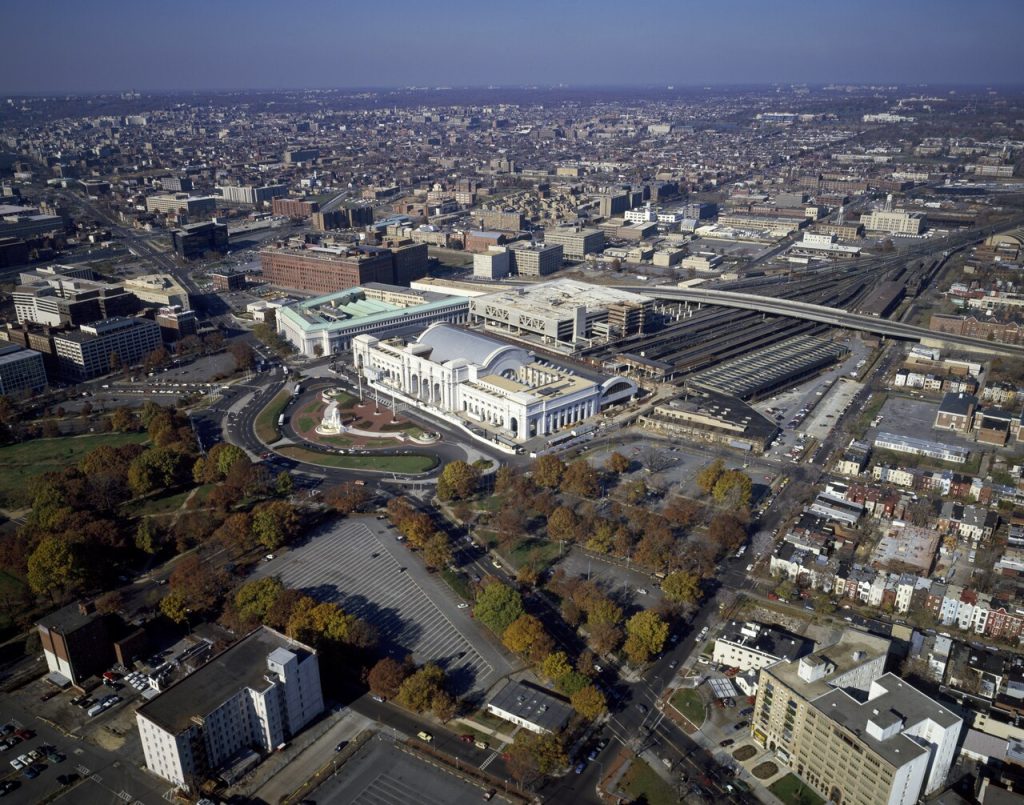
Union Station, the Beaux-Arts masterpiece that has anchored the corner of Massachusetts and Delaware Avenues NE since 1907, is one of the finest public art spaces in the entire city. And unlike the Smithsonian museums a mile down the Mall, it asks absolutely nothing of you — no timed-entry ticket, no donation, no line. You simply walk in off the street and the whole breathtaking thing is yours.
Start at the main hall, officially called the Great Hall, and resist the urge to immediately look up. Instead, stand just inside the bronze doors and take a slow, deliberate breath. The room is 96 feet tall at its peak — taller than the Capitol dome’s interior — and it stretches nearly 220 feet from end to end. The coffered barrel vault was modeled loosely on the Baths of Diocletian in Rome, and when morning light pours through the arched windows, the cream-and-gold plasterwork practically glows. Augustus Saint-Gaudens, arguably the greatest American sculptor of the nineteenth century, was brought in as a design consultant, and his influence is visible in the classical restraint of every carved detail.
Walk the perimeter of the main hall and you’ll find yourself in front of nearly four dozen legionnaire statues standing sentry along the upper balcony — 46 in total, each carved in a slightly different pose, each holding a shield. They were controversial when the station opened; the original figures were reportedly unclothed, and Congress intervened to have their shields repositioned. The story is apocryphal in some tellings but delightful in all of them.
Head toward the East Hall, which has housed everything from a presidential waiting room to a bowling alley over the decades, and now operates as a shopping and dining concourse. The tile work here rewards close inspection — look at the floor patterns and the arched window surrounds, details that most people walk across without ever noticing.
If you arrive in the early morning, the station is serene. By midday it hums with commuters and tourists who are, almost universally, too busy looking at their phones to look up. That is your advantage. Find a bench in the main hall around 10 a.m. on a weekday, order a coffee from one of the cafes just off the concourse, and simply sit. Watch the light move across those gilded vaults. Listen to the acoustic shimmer that comes from a room this large filled with the soft noise of human movement. It is one of the most quietly extraordinary free experiences in the American capital.
Union Station is reachable directly via the Red Line Metro, making it one of the easiest stops in the city. Parking exists beneath the building if you drive, though the Metro arrival — ascending the escalator directly into that vaulted space — is an experience unto itself. Amtrak trains depart from the lower level, and if you happen to be passing through on your way to Philadelphia or New York, give yourself an extra forty minutes and walk the art trail properly. You will not regret it.
Washington is full of places that ask you to slow down, but Union Station is one of the very few that rewards slowness immediately, visibly, and for free. It has been here for over a century, and it shows no signs of running out of things to show you.